️ Culture,
Tradition, and Lifestyle
Ranipet sits at the crossroads of history and industry.
·
Industrial Lifestyle: As home to one of
the largest SIPCOT (State Industries Promotion Corporation of Tamil
Nadu) estates, the lifestyle here is fast-paced and business-oriented.
Thousands are employed in the leather, ceramic, and chemical industries.
·
Nawabi Influence: The nearby town of Arcot was the capital of the Nawabs of Carnatic. This
historical connection is reflected in the architecture (Delhi Gate) and the
strong presence of Urdu culture and Islamic traditions alongside Tamil customs.
·
Religious Significance: The district is a
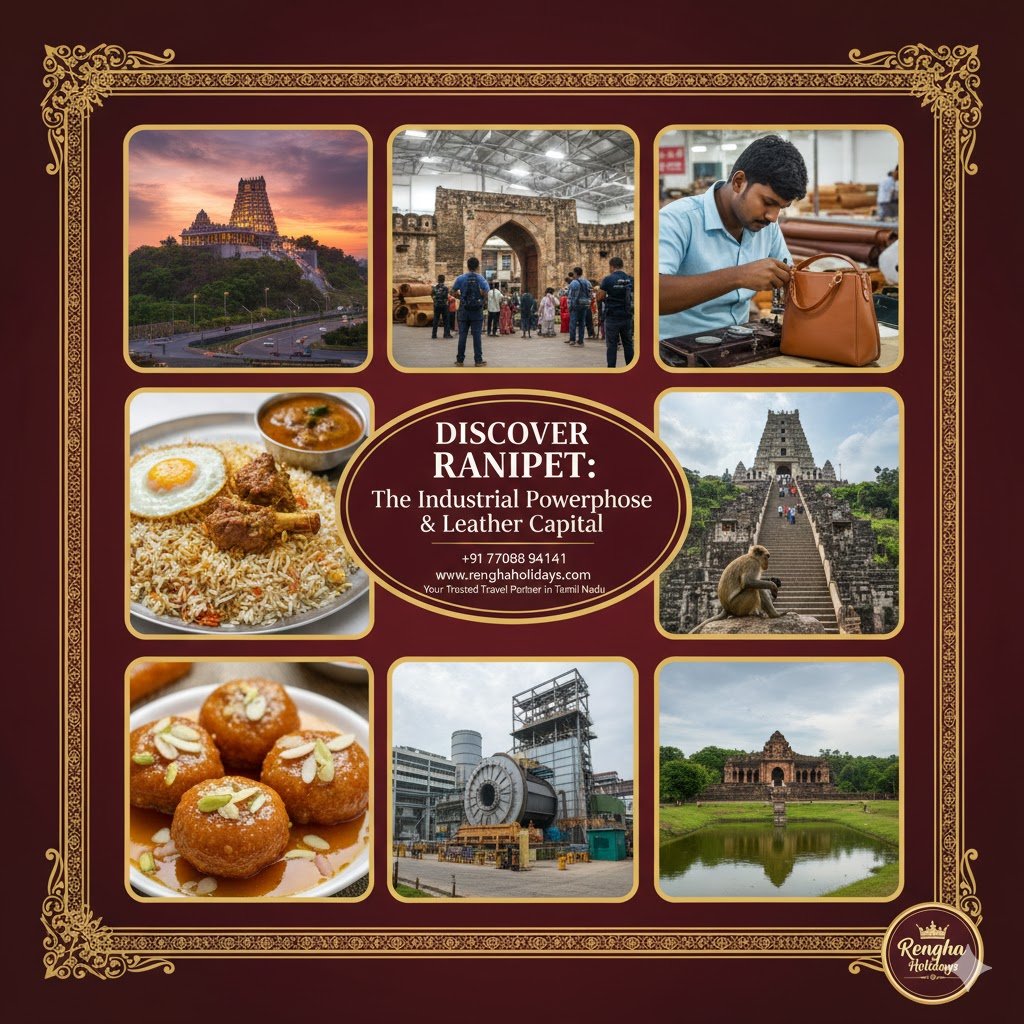
major pilgrimage center for Vaishnavites due to the Sholinghur
hill temple, one of the 108 Divya Desams.
Culinary Heritage
and Famous Food
Ranipet offers a rich culinary experience, heavily influenced by the
Nawabi kitchens of Arcot.
·
Arcot Makkan Peda: The undisputed
king of sweets here. A richer, nut-filled cousin of the Gulab Jamun, the Arcot Makkan Peda is famous statewide. The original
sweet shop (The Arcot Chettiyar Sweet Stall) is a landmark.
·
Arcot Biryani: While Ambur is famous, the Arcot style Biryani (often served with Brinjal curry
and Bread Halwa) is equally legendary, known for its use of short-grain Seeraga Samba rice.
·
Star Biryani Roots: The world-famous
Star Biryani brand has its deep roots in this belt, influencing the local
non-veg cuisine.
️ Administration
and Infrastructure
Ranipet is a strategically located district on the Chennai-Bangalore
highway.
·
District Profile: It was trifurcated from Vellore
district in 2019 to ensure better administration of the industrial belt.
·
Parliamentary Constituency (MP): The district falls
under the Arakkonam Lok Sabha constituency.
·
Assembly Constituencies (MLA): Key legislative
assemblies include Ranipet, Arcot, Sholinghur, and Arakkonam.
·
Economy:
o Leather Industry: It is the backbone
of the economy. Ranipet, along with Ambur and Vaniyambadi, forms the leather
cluster that accounts for a massive chunk of India's leather exports.
o Heavy Engineering: BHEL (Bharat Heavy
Electricals Limited) has a major boiler auxiliaries plant here.
o Ceramics: The district is
also a hub for ceramic tile manufacturing.
Education Hub:
Schools and Colleges
Ranipet boasts technical and medical institutions supporting its
industrial needs.
·
Engineering: Several top-tier engineering
colleges are located in the Sholinghur and Arakkonam belt.
·
Research: The King Institute of Preventive
Medicine and Research (in Guindy, but historically linked to the
region's health infrastructure development) set the tone for medical research.
The district has excellent nursing and pharmacy colleges.
·
Schools: Historic schools in Arcot and
Walajapet continue to provide quality education.
Major Festivals
·
Sholinghur Karthigai Festival: Thousands of
devotees climb the 1,305 steps of the Sholinghur hill temple during the Tamil
month of Karthigai (Nov-Dec).
·
Mukkodi Festival: A significant event at the
Sholinghur Narasimhar temple celebrated in December.
·
Float Festival: Celebrated at the Ratnagiri Murugan
Temple, drawing large crowds from the highway.
Unique Highlights:
Why Ranipet is Special
1. The Leather Hub: If you own a
high-end leather jacket or handbag from a European brand, it was likely tanned
or stitched in Ranipet.
2. The Green City: Historically, Walajapet (part of the district) was known as the first
municipality in Tamil Nadu and was planned as a "Silk and Velvet"
business hub by the Nawabs.
3. Delhi Gate: In Arcot, there
stands a historical arch called "Delhi Gate," which was part of the
fortifications during the famous Siege of Arcot
(1751) led by Robert Clive. It is a relic of the Carnatic Wars.
Top Tourist
Attractions and Sightseeing Places
Ranipet is home to powerful hill temples and historical forts.
1. Ratnagiri Murugan Temple
(Balamurugan)
Located right on the National Highway.
·
Significance: Built in the 14th century, this hill
temple is famous for the deity Balamurugan. It is impeccably maintained and
known for its peaceful ambiance despite being near the busy highway.
2. Sholinghur Yoga Narasimhar Temple
A prominent Divya Desam.
·
The Climb: There are two hills the Big Hill
(1,305 steps) dedicated to Lord Narasimha and the Small Hill (406 steps)
dedicated to Lord Hanuman (Yoga Anjaneyar).
·
The Monkeys: The hill is famous for its friendly
(and sometimes mischievous) monkeys.
3. Delhi Gate & Arcot Fort
Remnants
For history lovers, a visit to Arcot is a must to see the Delhi Gate. This is where the British East India
Company's military dominance in India truly began under Robert Clive.
4. Mahendravadi Cave Temple
An ancient Pallava-era rock-cut temple located near Arakkonam. It was
excavated by King Mahendravarman I and is a protected monument, offering a
quiet spot for archaeology enthusiasts.
5. Sripuram Golden Temple (Nearby)
While technically in the Vellore district, Ranipet serves as a convenient
gateway for tourists traveling from Chennai to visit the Golden Temple.
Experience the
Industry and Heritage of Ranipet!
From tasting the sweet Makkan Peda to climbing the sacred steps of
Sholinghur, Ranipet offers a diverse experience.
For customized
temple tours, industrial visits, and travel packages, contact us:
Mobile: +91 77088
94141
Website:
www.renghaholidays.com