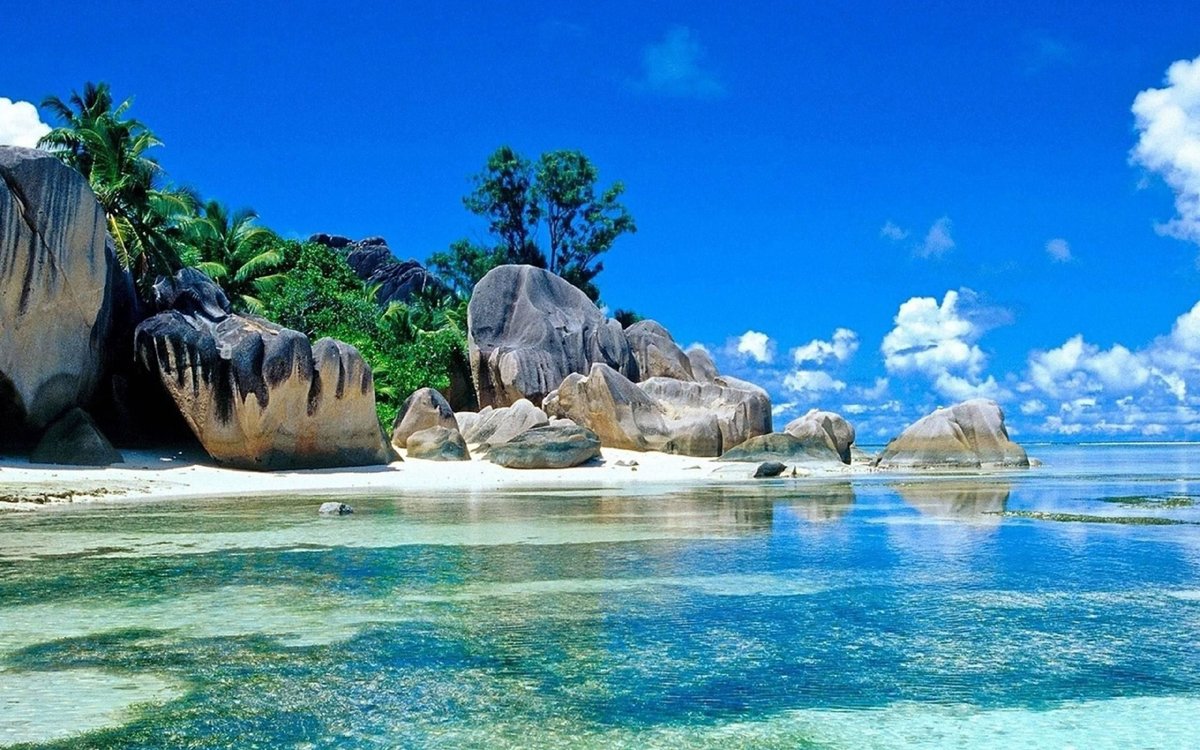
Fiji Islands
Fiji (on occasion known as the Fiji Islands), is a Melanesian us of the South Pacific Ocean. It lies about one-third of the way from New Zealand to Hawaii and consists of an archipelago of 332 islands, a handful of which make up most of the land region, and approximately 110 of which are inhabited.
Fiji straddles the one hundred eighty diploma longitude line (which crosses land on a far flung tip of Vanua Levu and once more close to the centre of Taveuni). The global date line is configured to pass east of all of Fiji, putting it all in one time sector and "ahead" of maximum relaxation of the sector.
Understand
Fiji is fabricated from volcanic mountains and warm tropical waters. Its various coral reefs today draw tourists from round the world, however have been the nightmare of European mariners until properly into the nineteenth century. As a result, Fijians have retained their land and often a lot of the noncommercial, sharing mind-set of people who stay in considerably extended families with direct entry to herbal assets.
When it came, European involvement and cession to Britain become marked by way of the conversion to Christianity, the cessation of brutal tribal war and cannibalism, and the immigration of a huge variety of indentured Indian workers, who now constitute nearly half of of the population, in addition to smaller numbers of Europeans and Asians.
Today, Fiji is a land of tropical rainforests, coconut plantations, excellent beaches, and fire-cleared hills. For the informal tourist it is blessedly free of evils such as malaria, landmines, or terrorism that attend many similarly lovable places within the international.
The 2006 coup and later political activities precipitated a discount in tourism. The Fiji tourism enterprise has spoken back by lowering costs and increasing merchandising of motel regions which might be distant from the politics of the capital Suva.
Climate
Tropical marine; handiest moderate seasonal temperature variation. Tropical cyclonic storms (The South Pacific model of Hurricanes) can occur from November to April. Temperature sensitive traffic may want to go all through the Southern Hemisphere wintry weather.
Terrain
Mostly mountains of volcanic beginning.
In the interior of the primary islands there are a few roads and usually trails, and a terrific wide variety of far off villages. Buses and open or canvas crowned "vendors" traverse the mountains of Vanua Levu numerous instances an afternoon and the interior mountains of Viti Levu typically weekly (The Tacirua Transport "hydromaster" bus which leaves from Nausori within the morning and runs past the hydroelectric reservoir and mount Tomanivi to arrive the same day in Vatoukola and Tavua is the high-quality and the surroundings is virtually spectacular in accurate weather!)
People
Fiji's humans are many of the most varied of all South Pacific international locations. With a population of over 900,000, the usa is a mixture of Indians (38%), Fijians (56%), ‘element-Europeans’ (1.7%), Europeans (zero.7%), Rotumans (1.4%), Chinese (0.9%) and different Pacific Islanders (1%). Fijians, the indigenous population of Fiji, are Melanesians who possess a mixture of Polynesian blood which is plain within the japanese islands (which include the Lau group), but less so in the west and interiors of the principal islands. Fiji’s Indians can be divided into two vast cultural categories reinforced with the aid of physical differences.
Those from the north of India – the ‘Calcuttas’, or ‘Calcutta Wallahs’ – came from Bengal, Bihar and Uttar Pradesh via the immigration factor of Calcutta and spoke ‘village’ Hindustani. The second group turned into the ‘Madrassis’, who commonly had darker skin and lacked the sharp functions of those from the north.
The part-Europeans, also known as 'kai loma', are a distinctive cultural institution with one foot within the Fijian world and the other in the Western global. Many are descendants of White Australians, Americans or Europeans who set up themselves both in Levuka, on the isolated coconut plantations of Vanua Levu or at the outer islands of Fiji at some point of the 19th century, and took Fijian other halves.
The Rotumans, a distinct Polynesian ethnic institution, come from the island of Rotuma (465 km north-west of Fiji).The Chinese, of whom there are approximately 5,800, first got here to Fiji in 1911. Many have intermarried with the local population.
History
Fiji became independent in 1970, after almost a century as a British colony. Democratic rule became interrupted with the aid of two military coups in 1987, caused by problems over a central authority perceived as ruled via the Indian community (descendants of settlement people delivered to the islands by means of the British within the nineteenth century).
The coups and a 1990 constitution that cemented local Melanesian control of Fiji, caused heavy Indian emigration; the population loss led to monetary difficulties, but ensured that Melanesians have become most people.
A new constitution enacted in 1997 changed into more equitable. Free and non violent elections in 1999 resulted in a government led by an Indo-Fijian, but a civilian-led coup in May 2000 ushered in a prolonged duration of political turmoil. Parliamentary elections held in August 2001 furnished Fiji with a democratically elected government led by Prime Minister Laisenia Qarase. There was a similar navy coup in 2006, led by Commodore Josaia Voreqe (Frank) Bainimarama.
Fiji is a lovely island in the United States of America which includes an archipelago of three hundred islands placed within the Melanesia subregion of Oceania. This jewel of the South Pacific Ocean lies about 1770 Km north of New Zealand and 4450 Km southwest of Honolulu.
The clustered islets and islands of Fiji are filled with dense rainforest, uncommon waterfalls, picturesque coral reefs, and shaggy volcano peaks. The countless shoreline of the Fiji islands features a serene ecosystem with seagulls cooing, the waves crashing towards the glistening sand, instilling an experience of calm in every traveller.
With more than 300 islands, this South Pacific paradise holds countless sights for a visitor. The capital city of Suva lies on Viti Levu, the largest of the Fijian islands, and is known for its colonial architecture, lush inexperienced parks, museums, and centres of studying. The most important international gateway to this country is the metropolis of Nadi, close to which you can discover relaxing hot springs, dust pools, and captivating archaeological sites simply waiting to be explored.
Each island in Fiji has something special to offer, and island-hopping is a pastime through which you can enjoy them. The pristine waters surrounding the Fiji shoreline are best for scuba diving, kayaking and other aquatic activities. On land, you may explore the uncharted desolate tract by way of taking one of the many hiking trails and take a look at the native flora and fauna.
A best beachside excursion destination, Fiji has a heat tropical weather for the duration of the year. The temperature primarily lies among 26 and 31 levels Celsius. The dry season occurs among May and October, and from November to April, the islands see heavy rain.
To know more, please click the below link…
https://renghaholidays.com/