Sivagangai is a district inside the state of Tamil Nadu, India. Sivagangai District G.O. MS. No. 1122 - Revenue dated 06/07/1984, separated from Ramanathapuram district, and transferred to G.O Ms.No. 346 has been in operation seeing that 15/03/1985 as on 08/03/1985.
Location and obstacles
Sivagangai district is the 26th largest district in terms of population. The population density is 324 consistent with square kilometers. There are 1,003 women in line with 1000 males. Sivagangai district is placed at 9.Forty three 'and 10˚.22' north range and seventy seven˚, 47 'and seventy eight˚.49' east latitude. It covers a place of 4189 rectangular kilometers. It is bordered via the Pudukkottai district at the northeast, Tiruchirappalli district at the northeast, Ramanathapuram district at the southeast, Virudhunagar, Madurai, and Pudukottai districts at the west.
Management Units
Sivagangai district includes sales divisions, Sivagangai and Devakottai, nine districts of Sivagangai, Manamadurai, Ilayangudi, Thiruppuvanam, Kalaiyarkovil, Devakottai, Karaikudi, Tirupattur, and Singampunari and 521 revenue villages. The district consists of twelve districts of Sivagangai, Manamadurai, Ilayangudi, Thirupuvanam, Kalaiyarkovil, Devakottai, Sakkottai, Kallal, S. Pudu, Tirupattu, and Singampunari and 445 village panchayats. The district consists of three municipalities particularly Sivagangai, Karaikudi, and Devakottai, and twelve municipalities particularly Manamadurai, Ilayangudi, Thiruppuvanam, Tirupattu, Singampunari, Nerkuppai, Pallathu, Kottaiyu, Kanadukathan, Kandanu, Puduvayal, and Nattarasankottai.
Structure
Sivagangai district has red soil and clay. The panorama inside the district is surrounded through the palm and all right trees. Nearly one hundred canals are irrigated by means of the Vaigai River. Piranmalai and the small hill at Kundrakudi are the hills in this district.
Sivagangai, Veera Managai Velu Nachiyar
Velu Nachiyar was born in Ramnad to the royal couple Mannar Sellamuthu Sethupathy and Sakandi Muthal in 1730 AD. Velu Nachiyar did no longer have any brothers and he or she was added up like a prince, skilled in martial arts, horse driving, archery, and dealing with special weapons. She also became knowledgeable in many languages inclusive of English, French, and Urdu.
When Velu Nachiyar was 16, she married Sivagangai Mannar Muthu Vaduga Mathur. The couple had a daughter named Vellachi. In 1772, the Nawab of Arcot and the British troops belonging to the East India Company united and invaded Sivagangai. They killed Muthuvadugananthur in warfare known as the Kalaiyar Koil conflict.
Velu Nachiyar and Vellachi escaped and lived in Dindigul with the help of the Maruthu brothers of Sivagangai and a few different powerful pals. In the years that Velu Nachiyar spent in Dindigul, she formed alliances and plotted her revenge against the British.
In 1780, she led the charge in opposition to her enemies with a navy she had constructed alongside the assistance of Sultan Hyder Ali of Mysore. She is likewise credited to have been the first character to apply a human bomb - Kuyili, her dependable follower (and some say adoptive daughter), doused herself in oil/ghee and set herself aflame to explode the ammunition of the British.
Velu Nachiyar became successful in recapturing her kingdom and became the queen of Sivagangai once more. In her reign, she shaped a girl's handiest military called Udaiyaal in reminiscence of (every other) her adoptive daughter who died in the battle against the British. Velu Nachiyar ruled Sivagangai for more than 10 years earlier than she died of an illness in 1796.
Top Attractions in Sivaganga District
Karpaga Vinayagar Temple
Kundrakudi Murugan Temple.
Sri Muthumari Amman Temple.
Koppudai Nayaki Amman Temple.
Vettangudi chook sanctuary Siva Ganga
Kalaiyar Kovil Temple.
Chettiar Mansion.
Sivan Koil.
Pattamangalam Guru Temple
Thayamangalam Muthumariamman Temple
Kollangudi Kali Temple
Nattarasankottai Kannathal Temple
Sorna Kaleeswarar Temple, Kalaiyarkoil
Ariyakudi Perumal Temple
Education
Education is the manner by which a society transmits its accrued expertise talents and values from one generation to some other. Education needs to offer the manner and possibilities to beautify the child's innovative expression and the capacity for cultured appreciation. Education gives an understanding of the arena round us. It makes youngsters able to decoding matters at the proper angle.
In Sivaganga district 133 Private Non – minority and Un-Aided Schools have 6840 seats in access stage class. As per RTE act 2009, 1759 (25% of total seats) seats are allocated to admit kids of Weaker Sections and Disadvantaged Groups.
- Alagappa Chettiar College of Engineering and Technology
Alagappa Government Arts College
Alagappa Polytechnic
Alagappa University
Central Electrochemical Research Institute
De Britto Higher Secondary School
Dr. Zakir Hussain College, Sivagangai
Government Sivagangai Medical College and Hospital
Ilayangudi Higher Secondary School
Kendriya Vidyalaya Karaikudi
Kendriya Vidyalaya Sivaganga
List of educational establishments in Sivagangai district
Pandian Saraswathi Yadav Engineering College
SMSV. Hr. Sec School
Sri Visalakshi Kalasala Higher Secondary School
Population
According to the 2011 census, the Sivaganga district had a populace of 1,339, one hundred and one with an intercourse-ratio of 1,003 females for every 1,000 men, tons above the countrywide average of 929. An overall of 137,235 had been underneath the age of six, constituting 70,022 males and 67,213 girls. Scheduled Castes and Scheduled Tribes accounted for 17.01% and .06% of the population respectively. In addition, the common literacy of the district became seventy-one .67%, as compared to the countrywide average of seventy two.99%,[4] at the same time as the district had a complete of 338,938 families. On the alternative hand, there is a total of 620,171 workers, comprising 117,030 cultivators, 122,166 predominant agricultural laborers, 9,864 in household industries, 212,042 other people, 159,069 marginal employees, 23,973 marginal cultivators, 77,397 marginal agricultural laborers, 4,792 marginal people in family industries and fifty-two,907 other marginal workers.
The large majority of the body of workers is dependent on agriculture (72.Eight%). In reality, the important crop of Sivaganga district is paddy whilst the majority of the district has crimson soil. The different plants that are grown are sugarcane, groundnut, pulses, and cereal such as millet.
The vast majority of the personnel is depending on agriculture (72.Eight%). In fact, the primary crop of the Sivaganga district is paddy while the majority of the district has red soil. The different vegetation which is grown is sugarcane, groundnut, pulses, and cereal along with millet. In response, the Tamil Nadu Agricultural University plans to install the country's first Red Soil Dryland Research Centre in the Sivaganga district quickly.
It would be immensely useful to farmers of chili, turmeric, medicinal flora, and tamarind, as the focal point would be to export their products. The proposed spices park might establish equipment for cleaning, sorting, grading, packaging, storing, and sterilizing amongst others. The cognizance would be to encourage the farmers to plant chili, the main crop in Ramanathapuram, Sivaganga, and close by districts, in addition to turmeric crops. Medicinal flora, being raised in and around Madurai district, would additionally get a boost, because it became planned to patronize farmers of medicinal flora.
Sugar enterprise
The Sakthi sugar factory is likewise placed in Sivaganga. It presents employment to extra than 1,000 laborers directly and circuitously. With this, it has the capability to produce greater than 5,000 lots of sugar according to today.
Solar strength farm
Moser Baer Clean Energy Limited has commissioned a 5 MW grid-connected sun PV venture at Sivaganga, Tamil Nadu. The assignment was provided to Sapphire Industrial Infrastructure Pvt. Ltd., a wholly-owned subsidiary of the farm, via a competitive bidding method conducted via the Tamil Nadu Renewable Development Agency. The task is, then, carried out under the 50 MWp generation based totally incentive scheme of the Ministry of New and Renewable Energy, Government of India.
Television plant
Videocon is putting in an Rs. 1,600-crore plants for color television units and different digital consumer durable at Manamadurai.
Hotels
In Sivaganga there are a large number of Hotels and Resorts available at first-rate quotes.
Popular luxury inns in Sivaganga District include Visalam Cgh Earth, The Bangala, and Chola Heritage. The Bangala, Chettinadu Mansion, and Chettinadu Court all received top-notch critiques from households touring inside the area.
See the overall listing: Family Hotels :
Visalam Cgh Earth, The Bangala, and Chettinadu Mansion obtained great reviews from visitors searching out a romantic resort within the District.
Some famous three-superstar accommodations in Sivaganga are Zodiac Lodge & Mahal, BNR Lodge.
Vegetarian Restaurant :
Ariya Bhavan, Shanmugha Bhavan and Aranmanai Vaasal
Annapurana – Kovilur avenue [opp. Hotel Sugam Intl.]; Meenakshi Bhavan-Sekkalai Road [near Hotel Udhayam]; Hotel Karthik –Near New Bus Stand [Hotel Golden Singha Complex]; Hotel Subhalakshmi Palace – Sekkalai Road.
Non-vegetarian Restaurant:
Amsavalli - Kovilur street , Hotel Ganga - Kovilur avenue.
Culture
Nattukottai means the U.S.A. Fortress, the name itself reminds of the big homes of Chettinad. The subculture of the Nagarathar community, the so-called people of the Nattukottai region, is to build large homes like forts. The art and architecture of Chettinad homes are the sign-in of their cultural historical past. Athangudi, Kadiapatti, Kothamangalam, Kandanur, Kottaiyur, Pallathur have a number of the maximum lavish homes of Chettinad. The massive threshold to the houses, with an excessive arch, resembles the gateway of temples in India. The spacious rectangular mutram, the imperative part of the residence is open to sky for free aeration. Thinnai, a raised platform serves as accommodation for travelers and visitors. The inner courtyard has a unique importance. Lined with stunning pillars product of Burma teak wood or granite, it serves as the venue for ceremonies and circle of relatives engagements. The floors are protected with Italian smooth tiles. The partitions are clean and made of unique plasters that incorporate powdered shells, lime, spices and gall-nut. This method keeps the house cool even in warm summers.
Sri Sasivarna Periya Udayana Thevar turned into the founding father of the Sivagangai dynasty. Velu Nachiyar and the Maruthu Pandian brothers are very well-known rulers of the Sivagangai dynasty. Sivagangai is the pinnacle quarters of the Sivagangai district connected with the relaxation of the nation through road and railway. It is situated 45km southeast of Madurai and I7km north of Mana Madurai.
Sree Viswanathar Temple, Raja Rajeswari Temple, and Sri Subramanian Temple are the 3 good sized temples of this place. The town is terrific with a massive Teppakulam (pond) in the front of the palace. A Government Museum is likewise placed here.
Food
Chettinad food, if authentic, is a lesson inside the way spices can be used within the kitchen. This delicacy, which is usually synonymous with highly spiced, fragrant meals, in reality, is a complex blend of properly-balanced flavors. “The fiery flavors come from the usage of black pepper and purple chili,”
The conventional Chettinad delicacies are well known for the use of such a lot of kinds of spices like megastar anise, complete purple chilies, fennel seed, cinnamon, cloves, bay leaf, peppercorn, cumin seeds, and fenugreek. In Chettinad cuisine, common “mystery” elements are dried flower pods, and kalpasi (black stone plant life).
The “Chettinad Cuisine” -
The mere aroma of the Chettinad Chicken curry would depart you drooling. Guaranteed!
Chettinad delicacies are similarly testimony to the myriad impacts from across Asia which played a part inside the improvement of lifestyles inside the place. The use of spices is pretty not like that inside the food of the relaxation of Tamil Nadu, and the cautious mixing of these flavorings offers a ‘layered’ effect to the taste of the food.
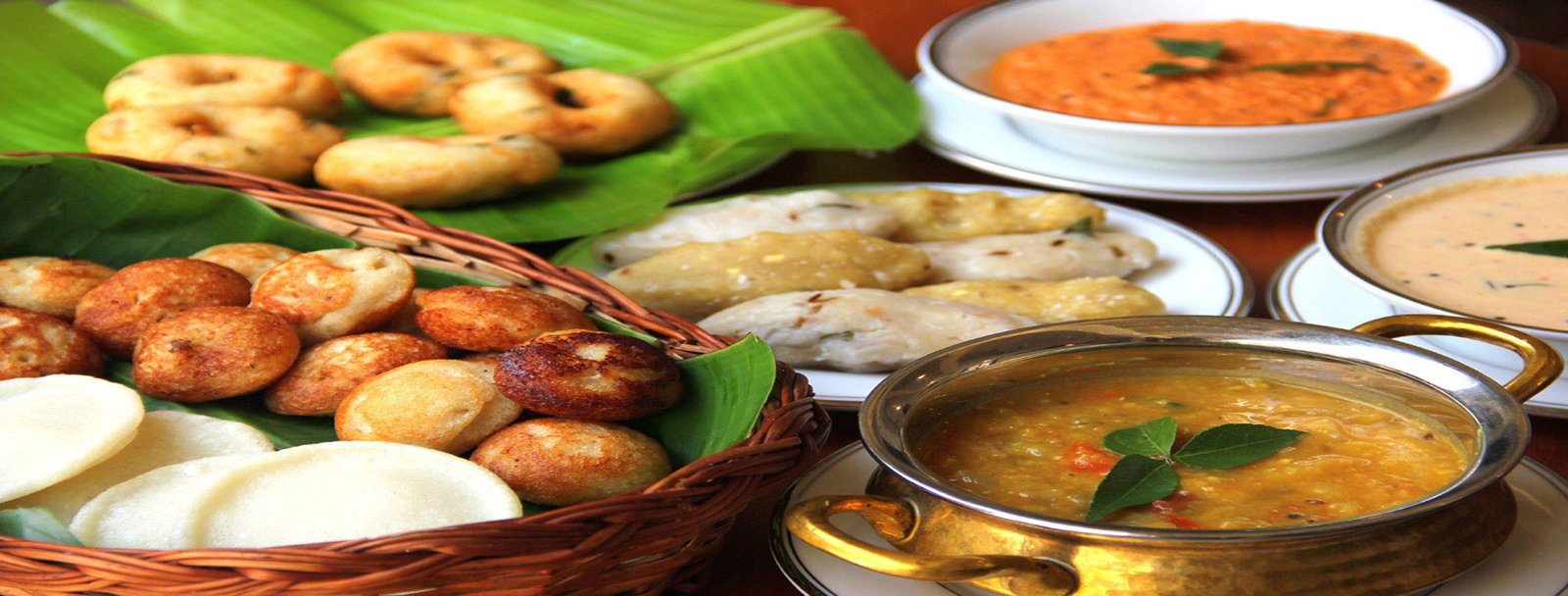
Many places around south India provide Chettinad fashion dishes however few put together it as well as the real locals in Chettinad itself. The Chettinad Chicken Biryani and the Chettinad Chicken curry are two Chettinad favorites no longer to be missed at any cost. Some of the popular dishes encompass 'Idiyappam', 'Paal Payasam', 'Chicken Chettinad', 'Palkatti Chettinad', 'Paniyaram', 'Urlai Roast', 'Vellai Paniyaram', 'Kozhukattai', 'Aatu Kari Kuzhambu with Steamed Rice', 'Nariyal and Soya Paneer Vada' 'Kuzhambu', 'Cabbage Poriyal' 'Karuppatti Paniyaram', 'Kuzhi Paniyaram',
The culinary subculture of the Chettiars reflects the interesting records of the community. Having lived in proximity to the ocean, the Chettiars used seafood to create a lot of their signature dishes inclusive of the meen kuzhambu (fish curry), nandu (crab) masala, sura puttu (shark fin curry), and eral (prawn) masala.
When the community later settled in the hot and arid Tamil hinterland, they blanketed wild sport which includes jungle fowl, Kada (quail), muyal (rabbit), and pitta (turkey) into their dietary behavior. Most of these predominantly non-vegetarian dishes had been, and still are, eaten with rice and rice primarily based accompaniments inclusive of dosas, appams, idiyappam, adais, and idlis.
The traditional Chettinad dishes in the main used regionally sourced spices just like the star anise, pepper, kalpasi (stone flower), and maratti moggu (dried flower pods). Foreign elements and maintenance strategies like solar-dried meats, berries, salted greens, and pickles in brine additionally enriched the culinary repertoire of this properly-traveled network. Kavuni arisi (black sticky rice pudding) truly has a Burmese have an effect whilst the Idiyappam (steamed string hoppers) has a Sri Lankan touch.
Items served first are positioned on the pinnacle left nook of the leaf, steadily moving closer to the proper inside the following order – salt, pickle, mor milagai (solar dried chillies in curd), varuval (a highly spiced dry dish), kootu (a lentil curry), urundai (fried lentil balls), poriyal (sautéed vegetable dish) and masiyal (a vegetable mash). Appalams (papadums), fritters and fries are positioned at the bottom left at the same time as rice and chapatti, paired with sambar, rasam or kuzhambu, occupy the centre. The backside right is reserved for candy dishes like ukkarai or paal payasam.
Chettinad is an area of the Sivaganga district of southern Tamil Nadu nation, India. Chettinad is widely recognized for its Chettinad delicacies, mansions, and temples. "Chettinad" also means a social caste that specializes in the training of food.
Chettinadu Cotton Sari
The cotton sari, also known as kandaangi, is precise in its dramatic patterns and shades. Its vibrance and weight are its distinguishing factors. Records and vintage pics show the usage of sari by preceding generations, earlier than the arrival of blouses and underskirts, and thus worn instead in a different way from the everyday modern sari. A gift, it is to be had in Kundi
Athangudi tiles
Athangudi tiles, named after the region of the manufacture in Chettinad, come in a myriad of colors and styles and are made by means of a unique manner the usage of local soil and glass plates. These tiles are a testament to the wealthy cultural heritage of the Chettiar community, who efficiently tailored many effects to their very own logo of neighborhood craftsmanship. The designs and shades used in Athangudi tiles are still those of bygone technology. However, of past due, new designs and patterns are being included.
The Athangudi tiles are hand-made. However, with a brief shelf lifestyles and comparatively gradual production method, those tiles aren't tons in a call for. The state of affairs has led to a decline within the market.
SIvagangai is one of the Culture And Traditions Of Tamil Nadu. Tamil Nadu is a southern state of India which is supremely wealthy in subculture and historical past. Known to be one of the oldest civilizations within the global,
Parallel to international structure, there are 7,000 bungalows in Chettinad. Eighty to a hundred and twenty years later, the Chettinad bungalows appear majestic with a new look. The pioneers of hard work inside the Chettinad location traded throughout many nations, but in their hometowns, they mastered the structure of those countries and erected astounding homes that challenged global structure. They have constructed the wall with an aggregate of lime combination, black currant, mustard seeds, and egg white aggregate. These are the things that make the wall of the bungalow glow and firm. The small bungalow is 40 toes huge and a hundred and twenty feet long, at the same time as the palace-like bungalow is 60 feet huge and 2 hundred toes lengthy. It might be first-rate without the fan. You need to walk half of a kilometer to enter the bungalow facade and then go out through the door. The front door to the bungalow is fabricated from Burmese teak. The ground is paved with Athangudi tiles, marble from the Dutch. The inner roof of the bungalow is fabricated from teak timber in the form of a crescent. The sculpture of elephant and elephant in it's far from a dinner party for the eyes. The ‘green painting’ on the roof wall points to many religious traveler websites like Madurai Meenakshi Amman Temple and Rameswaram Temple, indicating the non-secular involvement of the city. Japanese ‘flower’ stones hooked up on the wall alongside the ground upload splendor to the look. The ‘porous’ wood pillars helping the teak timber on the ceiling of the room stand majestically. The metropolis has added rainwater harvesting centuries ago by collecting rainwater gathered at some stage in the rainy season at the roof of the bungalow without losing it.
“Sivagangai is a city this is well-known our Traditional and lifestyle of Tamilians”
https://wa.link/mlarsr
https://renghaholidays.com/packages
https://www.instagram.com/reel/DSJY1HagbNs/?igsh=MTNlaDkyZ3I0eG1uMQ==