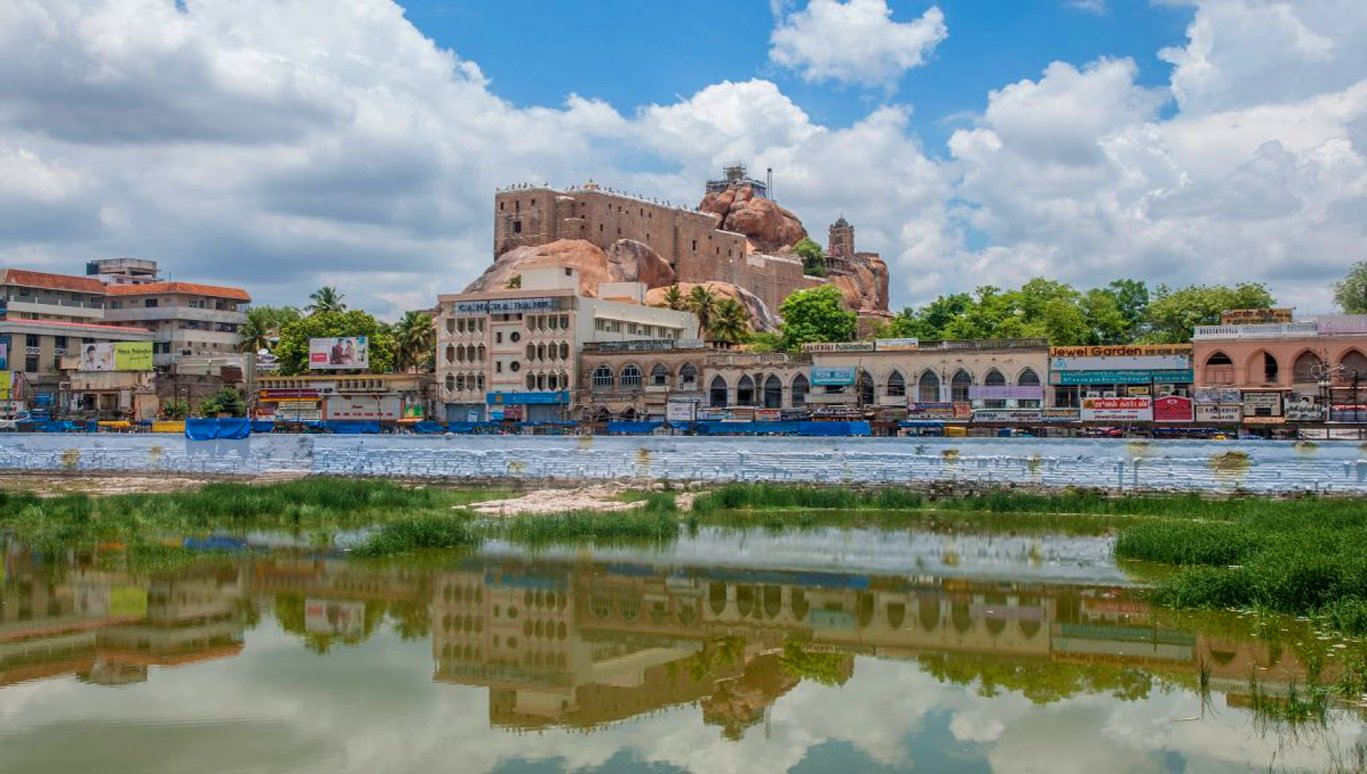
Tiruchirappalli District is one of the 38 districts, located alongside the Kaveri River, in Tamil Nadu, India. The predominant metropolis in Tiruchirappalli District is the town of Tiruchirappalli, also referred to as Trichy.
Tiruchirapalli (also Trichy or Trichy) is the fourth biggest city of Tamil Nadu and is strategically placed on the banks of Cauvery River. The metropolis reached the zenith of its glory at some stage in the reign of Nayak dynasty. Car Festival, which is a flower festival is celebrated with plenty ado here. Mukkombu is one of the outstanding picnic spot tourist places in trichy that is 18 km from Tiruchirapalli.
Eighty three m excessive Rock Fort Temple is the maximum outstanding landmark of Tiruchirapalli which stands majestically on its in any other case flat landscape. Other close by sights are Vayalur (eight km), Grand Anicut (24 km) and Natharmalai (37 km). Tiruchiraplli has its own global airport which connects it with cities in Asia and the Gulf location. It is hooked up with towns in India with a properly laid community of railways and buses.
Tiruchirappalli, located at the banks of the river Cauvery is the fourth biggest town in Tamil Nadu. It was a fort of the early Cholas which later fell to the Pallavas. Trichy is a blend of lifestyle and modernity constructed across the Rock Fort. Apart from the Fort, there are several Churches, Colleges and Missions dating lower back to the 1760s. The town and its fort, now in Trichy, had been constructed through the Nayaks of Madurai. This metropolis has given splendid Tamil students whose contributions to the Tamil literature had been very giant.
The maximum well-known landmark of this bustling town is the Rock fort Temple, a magnificent monument perched on a large rocky outcrop which rises all at once from the plain to tower over the vintage city.
It became one of the essential facilities around which the wars of the Carnatic have been fought within the 18th century at some point of the British-French battle for supremacy in India. The town is a thriving business centre in Tamil Nadu and is famous for synthetic diamonds, cigars, handloom cloth, glass bangles and wood and clay toys.
Trichy is one of the most crucial cities in historical records. Trichy is well-known for “Rockfort Temple” , ‘Srirangam Temple” , “Samayapuram Temple”, & It has vital dams- Mukumbo & Kallanai.
Trichy was known as Tiruchirapalli. Ancient days whilst there have been kingdom regulations, Nayakars was the first one to build the Rockfort Temple. Trichy changed into the capital of Madurai Nayaks.
There is a mystery tunnel from Rockfort Temple to Thanjavur Brihadeeswarar Temple which was utilized by Kings in the course of Wars to escape from a metropolis.
There is a milestone Dam built with the aid of Karikalan- Kallanai which continues to be used.
River Kaveri flows through this metropolis and Kollidam Dam is also used as a reservoir. This town has famous temples like Srirangam Ranganatha Swamy , Thiruvanaikovil, Samayapuram Mariamman, Uraiyur vekkali amman & Trichy Famous Teppakulam Church.
History
Woraiyur , part of current Tiruchirappalli, changed into the capital metropolis of Cholas from three hundred B.C. Onwards. This is supported by archaeological evidence and historic literature. There are also literary assets which tell that Woraiyur persevered to be underneath the control of Cholas even all through the times of Kalabhra interregnum (A.D. 300 – 575).
Later, Woraiyur in conjunction with the contemporary Tiruchirappalli and its neighbouring regions got here below the manipulation of Mahendra Varma Pallava I, who ascended the throne in A.D. 590. Till A.D. 880, in step with the inscriptions, this place turned into underneath the hegemony of both the Pallvas of the Pandyas.
In 880 AD, Aditya Chola introduced a downfall to the Pallava dynasty. From that point onwards Tiruchirappalli and its place have become part of Greater Cholas. In 1225 A.D the vicinity turned into occupied through the Hoysalas. Afterwards, it got here under the guideline of later Pandyas till the advent of Mughal Rule.Tiruchirappalli turned into for some time below the Mughal rule, which became put to a stop by the Vijayanagar rulers.
The Nayaks, the Governors of Vijayanagar empire, ruled this area until A.D. 1736. It turned into Viswanatha Nayaka who constructed the cutting-edge Teppakulam and the Fort. The Nayak dynasty came to an end throughout the days of Meenakshi.
The Muslims ruled this location once more with the aid of both the French or the English armies. For a few years, Tiruchirappalli became beneath the guideline of Chanda Sahib and Mohamed Ali. Finally the English introduced Tiruchirappalli and different areas below their management. The district then became under the hegemony of British for about a hundred and fifty years until the independence of India.
Situated at the banks of river Kaveri, Tiruchirappalli, the fourth biggest metropolis in the nation became a castle of the Early Cholas which later fell to the Pallavas. But the Pallavas in no way virtually controlled the manipulation of this strategic town and lost it to the Pandyas several times. This tug of war in the end ended while the Cholas reasserted themselves within the tenth century. Trichy persisted to be of their ownership until the decline of the empire after which it became a Vijayanagara stronghold.
When this empire collapsed in 1565, Trichy came to be occupied in flip by means of the Nayaks of Madurai, the Marathas, the Nawabs of Carnatic, the French and finally the British. But it became below the Nayaks of Madurai that Trichy flourished and prospered in its personal proper and grew to be the metropolis that it's miles these days.
Trichy flourished and prospered in its personal style ,built around the Rock Fort. Apart from the castle there are several Temples dating again to the 1760s. It was one of the major facilities around which the wars of the Carnatic were fought inside the 18th century at some point of the British-French battle for supremacy in India.
With its tremendous infrastructure centers Trichy will function as a great base to look at principal Tamilnadu.
Natural resources and water bodies
The fundamental rivers are the River Kaveri and the River Kollidam. The important rivers across the city are Koraiyar, Uyyakondan and Kudamurutti rivers.
Agriculture
The district has a big cattle and poultry populace with agriculture workers within the smaller villages like Kalpalayathanpatti.
The rivers Caveri and Kollidam start branching out to form the Cauvery delta irrigating huge tracts of land within the district. The principal vegetation is rice (large tracts); sugarcane (considerable tracts); banana/plantain; coconut; cotton (small tracts); betel; corn; and groundnut.
Tiruchirappalli town is located in Tamil Nadu state of India. As in keeping with provisional reports of Census India, the populace of Tiruchirappalli in 2011 is 847,387; of which male and female are 418,four hundred and 428,987 respectively.
Tiruchirappalli city is ruled via Municipal Corporation which comes beneath Tiruchirappalli Metropolitan Region. Tiruchirappalli city is located in Tamil Nadu nation of India.
As in step with provisional reviews of Census India, the population of Tiruchirappalli in 2011 is 847,387; of which male and female are 418,four hundred and 428,987 respectively. Although Tiruchirappalli town has a population of 847,387; its urban / metropolitan population is 1,022,518 of which 507,632 are men and 514,886 are females.
Soil Types:
Loamy, Clayey and sandy alluvial soil are the soil types discovered within the district.
Major Horticulture Crops:
Fruits plants like mango, banana, guava and acid lime, vegetables like tomato, onion, brinjal, and tapioca, spices like chillies, coriander, tamarind and turmeric, plantation crops like betel vine and flower vegetation like jasmine, marigold, crossandra and rose.
This turned into the Citadel of the early Chola Rulers, then the Pallavas conquered and dominated it. The war of energy between Pallava and Pandiya persevered and Pallavas lost the battle in many instances. Finally the Cholas retained the manager and ruled it for a long term.
When the empire collapsed around 1565, it became the flip of Nayaks , Marathas ,Carnatic Nawabs , French and eventually the British. The metropolis, around rock fortress, is an exceptional mixture of Tradition, Heritage and current surroundings. Several Churches, Colleges and missions of the seventeenth Century made human beings to call it as the Rome of the East.
Modern City has a massive Rail network, busy Airport, Big Industries like BHEL, Golden Rock Railway unit, Ordnance Factory belonging to the Naaratna categorized PSUs/Govt. Establishments; Multi Speciality Hospitals ,both Government and private; Educational Institutions matching the International Standard. Plenty of tourist destinations constantly continues in this town and the district is busy throughout the 12 months.
ROCKFORT :
It is also referred to as Ucchi Pillaiyar Kovil. It is in the coronary heart of the city. This is a 275 feet tall Rock Structure. It is great to pay attention, this shape is one of the oldest and calculated near million years old. There is a Cave temple at the top that is thought to have been constructed in 580 AD.
The Temples of Lord Shiva known as Thayumanavasa Swamy temple, Where the lingam is said to be projection of the rock itself and Lord Vinayagar [uchhi pillaiyar] is the appeal of this 350 steps rockfort. There are inscriptions in these temples that date back to the 3rd century B.C.
At the foothills of the rock castle, a big & beautiful tank and a pavilion where the yearly Float competition enthralls thousands of human beings. The Home of Robert Clive when he became in Trichy and the 18th Century Church, now housing the popular St.Joseph's College are the two crucial landmarks near this Tank.
Srirangam and Cauvery can't be separated from each other. Earlier, this changed into known as Vellithirumutha gramam. It is 7 kms from the Town. This is a six hundred acre River Island Town.
The Identity of this city is the Gigantic Sri Ranganatha Swamy temple, hooked up in a 156 acre land, is an exceptional vaishnavite Temple dedicated to Lord Vishnu. This is one of the 108 Divya Desams. The enclosures are guarded via thick and massive rampart walls.
There are 21 impressive and massive towers. Apart from 13 tired Rajagopuram [ completed in 1987] all the Gopurams are stated to have been constructed between 14th and seventeenth centuries. This temple underwent many adjustments throughout the rule of Cholas, Chera, Pandiyas, Hoysalas, Vijayanagar kings and Nayaks of Madurai.
Thiruvanaikaval [Thiru+Anai+Kaval] : It is 7 kms from the town and popularly referred to as Thiruvanaikoil too. This Jambukeswarar-Akilandeswari temple is dedicated to Lord Siva. This temple is one of the Pancha Bootha Sthalam [five elements of nature] representing water.
The Siva Lingam inside the Sanctum Sanctorum is said to be submerged within the water that flows from a subterranean spring into the Sanctum Sanctorum. Because an Elephant as soon as worshiped Lord Siva underneath the holy Jambu Tree, the God receives the name Jambukeswarar.
Thiruvanaikoil Temple is one of the five most important Shiva Temples referred to as Panchabhoota Sthala representing elements of water. The sanctum has Shiva Lingam in the form of Appu lingam (water lingam). The sanctum of Lord Jambukeshwara has an underground water stream and you may see water popping out of that move all the time. The presiding goddess is Devi Akilandeswari Amman.
According to legend, Parvathi carried out penance in the form of Akilandeswari in the Jambu forest. She made the lingam out of the water of river Kaveri, hooked it up beneath the Venn Naaval tree developed out of Saint Jambu and started out her worship. Lord Siva gave darshan to Devi Akhilandeswari and taught her Siva Gnana.
According to Sthala Purana, there had been Siva Ganas via the name Malyavan and Pushpadanta. They usually quarrel with each other and fight for one element or different. On the pinnacle of multi functional fight Malyavan cursed Pushpadanta to emerge as an elephant and the latter cursed the former to turn out to be a spider.
Both the elephant and the spider came to Jambukeswaram and persevered with their Shiva worship. The elephant amassed water from river Cauvery and carried out Abhishekam to the lingam below the Jambu tree each day. The spider built his internet over the lingam to prevent dry leaves from losing on it and save you Sunlight directly falling on Shiva.
When the elephant noticed the net and thought that as dirt and tore them via pouring water. The spider became irritated and crawled into the trunk of the elephant and bit the elephant to death. Lord Siva, moved via the deep devotion of the two relieved them from their curse.
As an elephant worshipped the Lord right here, this region came to be referred to as 'Thiru Aanai Kaa' (Thiru - Holy, Aanai - Elephant, Kaa - Forest). Later the actual name 'Thirunakkara' ended up Thiruvanaikoil.
Kallanai is an historical dam built throughout the river Kaveri in South India. Kallanai is located in Tamil Nadu inside the district of Trichy. This dam was built in AD second century by means of the Chola king Karikalan that is located 15 km away from Tiruchirapalli. Kallanai Dam is the fourth oldest water rerouting machine within the global which remains in life.
It changed into an insightful construction to divert the river Kaveri to the delta districts to uplift irrigation thereby heading off catastrophe of corps due to floods. The dam has a strong basis as well as a strong design. Due to its lovely engineering, the dam continues to be a notion to most of the contemporary dams and Kallanai dam is still used for diverse irrigation desires in Tamil Nadu. Because of its brilliant architecture, it’s one of the top vacationer spots in Tamil Nadu.
The nearest airport is the Tiruchirapalli airport that's 15 kms faraway from the dam website and the nearest railway station to Kallanai dam is Lalgudi railway station that is four kms long. The city also offers accommodation ranging from price range to superstar accommodations to match all wallets. The famous Tamil Nadu Hotels Trichy is one such to be able to make your go to even more memorable!
The butterfly park at Trichy that is taken into consideration as one of the most important butterfly parks in Asia, is being constructed over 35 acres at the price of approximately 8 Crores. .
It is precisely located close to the river financial institution of Cauvery close to Melur, Srirangam. This park has a lovely garden, fountain, largest butterfly glass residence, fountain and hut to take rest and feature meals. The Park additionally had a 1.2 KM walkway for the traffic.
The lawn is complete of nectar vegetation and host flora to draw butterflies. A large blue tiger butterfly sculpture may be visible at front inside the garden. The lawn has fountains, artificial kilos, suspended bridges, butterfly houses, sculptures of caterpillars, butterflies to draw many visitors..
The park also includes a 'Nakshatra Vanam', or a set of bushes that corresponds to the Zodiac symptoms and stars in Indian astrology. This park capabilities 27 tree or plant species similar to 27 stars of the Hindu almanac and 12 tree or plant species similar to the Zodiac signs. Visitors can plant a tree at free of fee in keeping with their signal.
ST.MARY’S CATHEDRAL CHURCH, MELAPUDUR
St.Mary’s Cathedral Church is positioned near Melapudur, 2 kms far from Tiruchirappalli Central Bus Stand and the Railway Junction. It is the headquarter church of the Catholic Diocese of Tiruchirappall. It is one of the oldest Dioceses in Tamilnadu and India as well.
The new Cathedral constructed in 2015 is very magnificent and it stands in the area of the vintage Cathedral, which was 175 years old (1841 – 2015). It is likewise the “Mother Church” of five dioceses together with Thoothukudi, Madurai, Palayamkottai, Sivagangai and Dindigul.
Grand Anicut :
Grand Anicut Called as Kallanai is nineteen kms from the city. This 330m long and 30m extensive Dam, is a high-quality engineering marvel of the yester years, for its strength and excellence. This was built through the excellent Chola king Karikala Cholan within the 2nd century.
In 1804 Captain Caldwell conducted a take a look at the Anaicut and made suggestions to grow the water usage for irrigation. The Lower Anaicut built through Sir Arthur Cotton in 19th century AD throughout Coleroon, a first-rate tributary of River Kaveri, is said to be a replicated structure of Kallanai.
Mukkombu :
It is 18 kms from the town and is known as the Upper Anaicut or Mukkombu Dam. This 685 m long dam, in 3 sections, was built in the 19th century by Sir Arthur Cotton inspired by means of Kallanai. River kollidam branches off from Kaveri at Mukkombu. This is visited via lots of humans for its lush greenery and scenic splendor.
Vayaloor :
It is 8 kms from the metropolis , also referred to as Kumara Vayalur . Popular Murugan Temple is set amidst inexperienced landscapes. Skanda Sashti, Thai Poosam, Panguni Uthiram are essential festivals of this temple. .
Samayapuram :
This is 20 kms from the metropolis and an essential pilgrim centre well-known for the Samayapuram Mariamman Temple devoted to Goddess Mariamman. There is a legend that King Vijayaraya Chakkaravarthi built the current form of the temple. Chithirai Car Festival [Apr-May] is the famous competition of this temple.
Sri Mariamman Temple is dedicated to Samayapurathal or Mariamman, an incarnation of Goddess Shakti. The foremost deity within the sanctum is made of sand and clay and for this reason there aren't any abhishekams performed to the primary deity, however alternatively the abhishekam is achieved to the small stone statue in the front of it.
According to legend, the present deity turned into the Ranganathaswamy temple at Srirangam, and one in every of the leader priests of the temple believed that the idol brought on him contamination and as a result asked it to be eliminated from the temple. It is a common belief that such nearby deities have giant powers and that they need to always be satisfied by using proper services and sacrifices.
According to history, King Vijayaraya Chakaravarthi constructed the modern temple in the 17th century. The Goddess Mariamman has huge powers over curing ailments and as a result, it's a ritual to shop for small metal replicas made with silver or metallic or diverse frame elements that want to be cured, and these are deposited in the donation box.
Devotees also offer mavilakku, a sweet dish fabricated from jaggery, rice flour and ghee. Persons suffering from Chickenpox and Smallpox come to this location, stay right here and pray to the Goddess for fast restoration. Abisheka Theertham is sprinkled on them after Pooja.
VEKKALI AMMAN TEMPLE
The presiding deity in this temple is discovered going through in the direction of the north. It changed into believing by using the ancient kings that Gods and Goddess going through north will bless the kings with victory inside the warfare. Hence all the historical kings used to hope Vekkali Amman before leaving for the conflict area.
The sanctum of the temple houses the idol of Vekkali Amman. The main function of the temple is the absence of a roof over the sanctum. The idol of Vekkali Amman is seen in a seated posture. She is visible protecting a trident, udukkai, a rope and Akshaya patra in her four palms. The temple has a golden chariot that's 9.Seventy five feet high, fabricated from 10.5 kg of gold and 25 kg of silver.
The temple is accomplishing the Sarva Chandi Homam for the past 23 years within the month of Avani (August / September), five day pageant in Chithirai (April-May), Panguni Poochoridal (March-April), Mango abhisheka at the last Friday of Vaikasi (May-June), Navarathri in Purattasi (September-October), Fridays in Thai (January-February) and Fridays and Tuesdays in Aadi (July-August) witness critical celebrations inside the temple.
Here devotees write their desires on a sheet of paper, region it on the toes of Amman after which tie it at a trident at the Sannidhi. Devotees complete their worship after their needs are fulfilled.
VIRALIMALAI MURUGAN TEMPLE
At a distance of 750 m from Viralimalai Bus Stand, 28 km from Trichy and forty three km from Pudukkottai, Viralimalai Murugan Temple is one of the well-known Hindu temples committed to Lord Murugan, additionally known as Subrahmanya located inside the metropolis of Viralimalai in Pudukkottai District.
Built by way of Aditya Chola in the 9th century, this temple is placed in the coronary heart of the Viralimalai town. The temple lies at the Viralimalai hill, as a result the city takes the call of the hill. This hill is small and rocky and there are 207 steps to reach the temple. On the way to the pinnacle, there are stunning mandapas for devotees to relaxation.
The surroundings of this temple is full of thick flora. This temple is specially regarded for the peacocks which might be observed in masses. Within the premises of the temple, there's a statue of Kashyapa and Narada Muni alongside several sculptures of Arumugan and Arunagirinathar on its pillars. At the foot of the hills the water tank is referred to as Saravana Poigai.
On the eastern side there may be a shrine for the goddess Maia Kannudaiyal. It is standard to worship this goddess before hiking up the hill. On the way to the hill there may be a small cave temple for Meenakshi Sundreshwarar and a Mandapam called Sandana Kottam at the end of the steps.
The principal idol Lord Murugan within the sanctum sanctorum is astounding. The Lord is in the form of Arulmugan, six-confronted and with twelve fingers seated elegantly on the peacock dealing with east. The divine consorts Valli and Devayani stand on either side.
The devotees can see the three faces on the lower back in the reflection whilst the alternative three may be considered directly. Cigar manufactured from sandal paste is a completely unique offering to the lord at this temple.
According to records, at some point of the reign of Ramachandra Thondaiman of Pudukottai the Lord is thought to have seemed in his dream and requested the supplying of cigars for the Kalasandhi and Sayaratchai puja. The king is stated to were cured of his illnesses after the provide of cigars to the Lord according to records. There are several caves in which saints and yogis have accomplished penance.
Taippusam, Panguni Uthiram, Kanda Sasthi and Adikrittikai are the principal gala's celebrated at this temple.
Thalamalai Perumal Temple
At a distance of 5 km from Sevinthipatti, 39 km from Gunaseelam, 34 km from Namakkal, 95 km from Erode, 65 km from Trichy & 354 km from Chennai, the ancient and well-known Thalamalai Perumal Temple is located on a unique rock on the peak of Thalaimalai Hill. It is a famend Vaishnava temple.
This hill receives its name because it resembles the pinnacle of a person. This hill is likewise known as Siragiri. The presiding deity of the temple is Nallendra Perumal, a shape of Lord Vishnu. One can discover shrines of Venkatachalapathy, Alamelu Mangai Thayaar, Goddess Mahalaxmi, Sri Devi, Bhudevi, Lord Anjaneya, Garudazhvar, and Karupanna Swamy.
If one takes a holy dip inside the Kannimar Sunai and prays to Lord Nallendra Perumal, they would be void of the awful effects of Lord Shaneeswar. This temple was constructed by Madurai Nayaks.
There is a spring referred to as Ramar Sunai with water flowing all the time. Devotees stroll around on a slender route around the temple for pradakshinas. People strongly agree that going round this rock temple might provide them successful marriage, wealth and toddler birth.
Visitors need to trek for approximately four kms through rocky routes running through steep stretches at instances. It generally takes about 2 hours to trek upwards. The hiking starts from Thalamalai foothill, which is 10 kms from Appananallur. From Trichy, the path goes through Gunaseelam, Musiri, Manamedu and Appananallur.
Uthamar Koil Temple
At a distance of 0.5 km from Uthamarkoil Railway Station and 15 km from Trichy, Uthamar Temple additionally called Purushottam temple, Thirukkarambanoor or Bhikshandar Kovil, situated in Uthamarkoil village is dedicated to Lord Vishnu, Shiva and Brahma.
The temple is assumed to have been built by using the Medieval Cholas of the overdue eighth century AD, with later contributions from Vijayanagar kings and Madurai Nayaks. Constructed inside the Dravidian fashion of architecture, the temple is glorified within the Divya Prabandha, the early medieval Tamil canon of the Azhwar saints from the sixth-9th centuries AD. It is one of the 108 Divyadesam dedicated to Vishnu.
According to a legend, Brahma became very arrogant because he turned into the author. This made him feel superior to Shiva. Brahma once visited Kailasam to satisfy Shiva. Parvathi, the wife of Shiva was harassed and completed pooja to Brahma instead of Shiva.
Lord Shiva plucked off one head of Brahma to avoid the confusion among the two. This ended in Shiva incurring a Brahma Hatya dosha. The skull of Brahma caught the hands of Shiva which he could not separate no matter all efforts. All the food presented to him became fed on via the cranium and it never was filled.
Holding the skull, Lord Shiva came all the way down to earth as a Bikshadana along with his skull bowl. When Shiva got here to this vicinity, Lord Vishnu requested Mother Mahalakshmi to provide food in the bowl. When Mahalakshmi did so, the bowl commenced to over flow and quenched the hunger of Lord Shiva, hence, she became to be praised as Pooranavalli, a person who fulfills the necessities of the needy.
The temple has photos and separate shrines for Purushottama, Bikshadanar, Brahma and their consorts Poornavalli, Soundaraya Parvathi and Saraswathi. This is one of the few temples, wherein the Hindu trinity are worshipped with their consorts in six separate shrines in the same temple complex.
The photo of Vishnu inside the shape of Purushottama is in a reclining posture dealing with the east. There are two shrines placed to the south east, each housing the snapshots of Poornavalli and Mahalakshmi. The shrine of Shiva inside the shape of Bhikshatana is positioned in the sanctum at the back of Purushottam temple.
The granite photographs of the deities Ganesha, Murugan, Nandi and Navagraha are located within the corridor leading to the sanctum. The shrines of Brahma and his consort Saraswati are located inside the south west corner of the temple complex.
Agaya Gangai Falls
At a distance of one km trek from Sri Arappaleeswarar Swamy Temple at Ariyurnadu, 55 km from Namakkal, ninety two km from Salem, 138 km from Trichy and 400 km from Chennai, Agaya Gangai or Akasa Ganga waterfall is located in Kolli Hills of the Eastern Ghats.
Akasa Ganga is a fascinating three hundred ft waterfall fashioned on River Aiyaru. The fall is enclosed with the dense woodland which increases its appeal and grandeur. It is situated in a stunning valley surrounded through the mountains on all aspects. The picturesque landscape created through the water fall is a perfect destination for the nature fans.
The vicinity is ideal for trekking and the breeze is great. The water of the falls is taken into consideration to include medicinal homes because of the forms of medicinal herbs grown across the wooded area which makes it a natural spa. People right here trust that taking bathtub within the water healing procedures many illnesses.
Owing to this attribute, human beings from close by areas take bathtubs in the water so one can cure their illnesses. On the 18th day of Tamil month of Aadi neighborhood people assemble right here to wish and express their gratitude for the river.
To reach the waterfall traffic ought to stroll down via 1300 steps which takes around 45 mins one way. There is another course from Puliancholai, which takes approximately 5 hours trek to attain the falls. This path runs via dense woodland and mountain areas. This trekking route is a difficult route and appropriate for experienced trekkers.
The caves of Korakkar Siddhar and Kalanginathar Siddhar are situated close to the Agaya Gangai waterfalls inside the forest area.
Kolli Hills
At a distance of 50 km from Namakkal, 87 km from Salem, a hundred thirty five km from Trichy & 395 km from Chennai, Kolli Hills or Kolli Malai is a small mountain range located in Namakkal district of Tamil Nadu. Semmedu is the headquarters for the Kolli hills. These hills are a part of lie at an elevation of one thousand to 1300 m and cowl an area of about 280 square km. The Kolli Hills have 70 hair pin bends to reach the pinnacle of the hills from the Namakkal aspect. The mountains are exceedingly untouched through industrial tourism and still retain their herbal beauty.
The Mountain is known as Kolli Malai after the Goddess Ettukkai Amman (Kolli Paavai). According to legend, the sages selected Kolli hills after they had been looking for a peaceful vicinity to do their penance. However, the demons invaded the hills to disrupt the penance whilst the sages began their rituals. The sages prayed to Kollipavai, who according to the myth, chased away the demons.
Trekking at Kolli Hills is a popular activity. Trekking to Agaya Gangai Waterfalls is an outstanding revel in. There are viewpoints - one at Seekuparai and any other at Selur Nadu. There is a pineapple research farm maintained by the Government of Tamil Nadu at Seekuparai Viewpoint.
Kundur Nadu, Puliancholai and Ariyur Solai are the three most important reserved forests of the location. Arapaleeswarar Temple, Siddhar Caves, Agaya Gangai Waterfalls, Botanical Garden, Masila Falls and Selur ViewPoint are few of the popular sights of the area.
The Government of Tamil Nadu has installed a Boat House in the vicinity that attracts visitors. An annual tourism pageant within the month of August is organized at pineapple studies farm via the state government. The Ori Festival is also celebrated in grand style inside the region.
Kolli Hills are covered with evergreen forests, along with tea, coffee, pineapple, black pepper, jackfruit and plenty of different plant species. The wildlife consists of Sloth bear, barking deer, Indian pangolin, jackals, mongoose, palm civets and many reptiles and snakes, the endangered Python molurus and a number of birds are found in Kolli Hills.
The best time to visit Kolli Hills is during the year, besides for the monsoon season when there may be a risk of landslides because of heavy rainfall. There are few Resorts and Lodges are to be had for accommodation. Boating is to be had at Boat House after the botanical garden.
Puliancholai :
This is a woodland area around 72 kms from Tiruchirapalli on the foothill of the Kollimalai. This is a groovy, green and delightful woodland place with waterfalls that makes Puliancholai appropriate for a tour at some point.
Tiruvellarai :
It is 25 kms from the metropolis. The temple is on a 50 ft tall hill of white rock, subsequently this become called as Thiru Vellai Parai [white rock]. Yogi named Pundarikakshan used to provide Tulasi each day from his nandavanam to God and Goddess inside the temple Pleased by means of Yogi’s bakthi, Perumal blessed him. Perumal is likewise known as Pundarikakshan. Tirumangai Azhwar sang hymns on Pundarikakshan right here.
Gunaseelam:
Another dwelling house of Lord Vishnu, at the northern financial institution of Cauvery River, just 24 kms from the city. The Lord here is known as Prasanna Venkateshwarar. People go to this temple in lots and provide prayers to Perumal, as they consider the healing procedures of intellectual illness.
Pachamalai :
Pachamalai is an inexperienced hill range 80 kms from Tiruchirapalli. It is at an altitude between 500 to one thousand m. It is a haven for the tribal population of this vicinity with a particular culture and life-style. Thenpara nadu, Kombainadu ,Aathi Nadu and Vannadu are some villages right here. Small Streams and falls, hiking are tourist points of interest at Pachamalai.
Planetorium :
Anna Science Centre/Planetarium is positioned on Pudukottai Road, Near Airport. Programmes in Tamil and English version are shown each day Ph.0431-2422190
Government Museum :
This is positioned in Rani Mangammal Mandram, Trichy-2. Bronze and stone sculptures are on display right here.
Lourdes Church :
This Church is located near Rock-castle, Teppakulam. Church of Our Lady of Lourdes is the reproduction of the World Famous Basilica of Lourdes in Southern France. It is an exceptional feat of Indian Craftsmanship and Glass Paintings.
Nadirsha Dargah :
This is four kms from the city, near the Main Guard Gate. This is one more important Islamic holy destination of the city. The huge and elegant Dome was constructed in Indo-Saracenic Architecture. Urs is the well-known festival of this Dargah.
Sri Brahmapureeswarar Temple - Tirupattur
At a distance of 35 km from Trichy, Sri Brahmapureeswarar Temple is one of the rare temples devoted to Lord Brahma situated at Tirupattur. While this is predominantly a Shiva temple, it is very intently related to Lord Brahma. Devotees believed that someone can trade his fate with the aid of looking for advantages at Brahmapureeswarar Temple.
The presiding deity of the temple is Sri Brahmapureeswarar inside the form of a Swayambu Lingam. He is known as Brahmapureeswarar seeing that he changed the future of Brahma. There are seven enclosures leading to the sanctum. Every year inside the Tamil month of Panguni (March-April) for 3 days, the daylight falls directly at the presiding deity. It is a miracle that the sun rays pass the seven entrances and fall immediately at the lingam.
Goddess Parvathi is worshipped as Brahma Sampath Gowri, located adjacent to Sri Brahmapureeswarar shrine. There is a separate shrine for Lord Brahma in meditative pose sitting on a lotus. The idol of Lord Brahma is stunning 6 toes high decorated with Turmeric. The temple complex also has the Jeeva Samadhi of Yogi Patanjali, the author of Yoga Sutras.
According to mythology, Lord Brahma as soon as became very proud that he is the writer of the universe. He felt he became extra powerful than Lord Shiva - since he had the power of creation. Seeing his satisfaction, Lord Shiva was indignant and destroyed Brahma's 5th head and additionally cursed him that he might lose his powers of introduction.
After dropping his fifth head and the responsibility of creation, Brahma realized his mistake. He worshipped Shiva at numerous locations to be relieved from the curse. Lord Brahma mounted 12 lingams around the Brahmapureeswarar site and worshipped Shiva right here for a terribly long term. Pleased by using Brahma's affections, Shiva gave him darshan under the Magizha tree and liberated him from his punishment.
The 12 small shrines of Lord Shiva situated inside the Brahmapureeswarar temple complex are Sri Brahmapureeswarar, Sri Pazhamalai Nathar, Sri Padaleeswarar, Sri Sudharaneeswarar, Sri Thayumannar, Sri Sabthagiri Eswarar, Sri Kalathinathar, Sri Jambukeswarar, Sri Kailasanathar, Sri Arunachaleeswarar, Sri Ekambareswarar and Sri Ranganathar.
Brahmotsavam festival, Maha Shivarathri, Kathigai, Navarathri and Vinayaka Chathurthi are the most important festivals celebrated here. Mondays and Thursdays are the maximum desired days for getting darshan.
The Kailasanathar temple is another temple placed in Tirupattur, which is around 1 km from Brahmapureeswarar temple. This temple includes the jeeva samadhi of sage Vyagrapadha.
HOTELS IN TRICHY
1. Hotel Sangam
2. Ramyas Hotels
3. Hotel Gajapriya
4. Hotel Aristo
5. Ashok Bhavan Lodge
6. Hotel Raja sugam
7. Hotel Vignesh
8. Hotel Ashby
9. Jenny's Residency
10. Hotel Abirami
11. Hotel Anand
12. Hotel Royal Sathyam
13. Hotel Mathura
14. Hotel Mayas
15. Hotel Mega
16. Tranquility Guest House
17. AARTHI RESIDENCY ANNEXE
An Astonishing Engineering marvel of Tamil Nadu.
Hey friends, Hope u all taken aback closing week by understanding the tremendous architecture of Brihadeeswarar temple. Oops!! I don’t assist you to take breath!! Here I am again with one more outstanding record of TAMIL NADU.
Name : Kallanai
Alias : Grand Anicut
Age : 2000 years
Location : The River Kaveri, Tiruchirapalli district.
Constructed with the aid of : King Karikala Chola (Chola Dynasty)
Aim : To inspire irrigation.
Significance of structure
The Kallanai dam across the Kaveri River is 329 meters lengthy, 20 meters wide and five.Four meters excessive and is composed of unhewn (no longer given a finished shape through or as if with the aid of hewing : difficult, unpolished) stones.
The anicut changed into built on inter-locking generation without cementing fabric
The initial place that changed into irrigated by using the ancient machine of canals turned into sixty nine,000 acres which have been extended to a Million (four hundred,000 ha) by means of the turn of the twentieth century.
The precise shape of the Kallanai dam includes big stones sunk inside the kaveri river to divert the water flow to the fertile delta.
History of kallanai
It is an unhappy truth that after the British took over Thanjavur from the Marathas in 1800, irrigation paintings turned into not noted but the delivery found out within the Cauvery became inadequate.
In 1804, Captain Coldwell repaired the Grand Anicut and supplied dam stones zero.Sixty nine metre in peak on its crest and on the identical time, raised the river embankment above, making sure additional water to the Cauvery.
Benefits of Kallanai
The Kallanai was constructed to divert floods from the Kaveri department of the river into the Kollidam branch “via a quick connecting movement” “while the water stage inside the river rose above its crest”. The Kollidam “changed into the wider (also the steeper, straighter, and for this reason faster) of the 2 [river] branches, and the flood provider. Once the floods have been diverted to the Kollidam, they flow immediately to the ocean, inflicting minimal damage to agriculture”.
The phrase, `Kollidam’, means a place that could contain or suit matters. It can suit 3 to 4 lakhs Cusecs of water.
The creation of the dam proved to be useful for the farmers of the delta region.
The dam is rapidly rising as a traveller spot within the area.
It is likewise a home to a huge style of plant life and fauna. The chicken lovers can observe the fowl life within the basin and may take the pictures of those lovely creatures.
The dam flaunts a magnanimous panoramic view of the water all around. You will experience cozy and refreshed within the cool and pleasant climate in the surroundings. People mostly visit the location and feature and break out from busy urban life.
About the Dam
It was an insightful construction to divert the river Kaveri to the delta districts to uplift irrigation thereby avoiding disaster of corps because of floods. The dam has a strong foundation in addition to a strong layout. Due to its lovely engineering, the dam continues to be a suggestion to most of the current dams and Kallanai dam remains used for various irrigation needs in Tamil Nadu. Because of its remarkable structure, it’s one of the highest visitor spots in Tamil Nadu.
The usual anatomy of Kallanai dam encompass the big stones sunk within the Kaveri river to reroute the water flow to the delta place. The British navy engineer, Captain Caldwell turned into an appointed in 1804 to take a look at and promote irrigation to deltas.
During the studies he observed that the majority of water is flowing to Kollidam and best a moderate extent of water is left at Kallanai dam for irrigation at delta regions. Later as per the recommendation of Captain Caldwell, the ability of the Kallanai dam became raised by way of top.
Kaveri River paperwork as a border to the Salem and Erode districts. In the township of Bhavani, the Bhavani River additionally connects to Kaveri River and the famous pilgrimage vacation spot the Sangameswarar Temple is likewise situated in the junction of these two rivers.
The dam locality is associated with the history of Tamil Nadu due to the Kallanai’s Engineering Marvel and it makes the site visitors to study more approximately the Tamil literature, language and about the Sangam duration.
The travelers can enjoy a sparkling bath on the river (if the water degrees are not high) and might taste the fish on the small shops at the pocket roads. The 2000-yr-antique dam leaves extraordinary deal with and the vicinity is preserved with a park and the force-in centers in order that the human beings use it as a picnic spot. Fresh fish bought by means of local fishermen at lowest charges in an overriding appeal to the travelers. The Kallanai dam is really something to be experienced before one leaves the earth!
Street shopping in Trichy encouraged through our professionals:
Gandhi Market. Shopping Place in Trichy.
Chinna Kadai Street. Shopping Place in Trichy.
Chinnar Bazaar. Shopping Place in Trichy.
Flower Bazaar, Srirangam. Shopping Place in Trichy.
Thillai Nagar. Poompuhar Handicrafts.
To know more, please click the below link...
https://renghaholidays.com/