Introduction
Erode District lies on the acute north of Tamil Nadu. It is bounded more often than not via Karnataka State and also River Palar covers a pretty lengthy distance. Namakkal and Karur Districts lie to the east. The district of Dindigul is its immediate neighbour to the south and to the west, as its limits are the districts of Coimbatore and Nilgiri. Thus, the Erode District is effectively a land-locked area with no staff expenses at sea.
Erode District located at among 10 36” and eleven 58” North Latitude and among seventy six 49” and 77 58” East Longitude.
The location within the district can be portrayed as an extended undulating simple slightly sloping towards the river Cauvery inside the south-east. The two important tributaries of river Cauvery viz. Bhavani and Noyyal drain the long stretch of mountains within the north. A part of the eastern boundary of the district is fashioned by river Cauvery, coming into the district from Salem and flowing in a southern course.
Erode District turned into part of Coimbatore has its history intervened with that of Coimbatore and because of its near linkage with the erstwhile Coimbatore district. It is very hard to one by one deal with the history of the Erode region. Together with the location comprising the Coimbatore district, it formed part of the historical Kongu usa referred to as “Kongu Nadu '' records of which dates again to the Sangam era. It is determined that within the early days, this place became occupied by tribes, most distinguished among them being the “Kosars” reportedly having their headquarters at ‘Kosamputhur’ which is believed to have in due direction become Coimbatore. These tribes had been overpowered by way of the Rashtrakutas from whom the area fell into the arms of the Cholas who ruled perfect at some point of the time of Raja Chola. On the decline of Cholas, the Kongunadu came to be occupied with the aid of the Chalukyas and later by way of the Pandyas and Hoysalas.
Climate and Rainfall
The district in standard is characterized by scanty rainfall and dry weather. Maximum rainfall is recorded in Gobichettipalayam and Bhavani taluks. The Palghat hole inside the Western Ghats, which has a relaxing impact inside the weather of Coimbatore District, does no longer render a whole lot assist in bringing down the dry climate on this place. The cool-wind that gushes out of the west coast thru Palghat gap loses its coolness and turns into dry by the point it crosses Coimbatore district and reaches Erode vicinity.
Unlike Coimbatore that's blessed with a health-aiding weather, Erode District has dry climate in the course of besides during the monsoon season. Generally the first two months of the year are first-rate, however in March, Mercury profits an upward trend which persists until the stop of May. Highest temperature is typically recorded at some stage in May. The scandy showers at some stage in this period do now not offer any comfort to the oppressive warmness. There is a light improvement in the weather for the duration of June-August duration. During this pre-monsoon period, the mercury reverses its trend and by means of September, the sky receives overcast heavily however the rains are meagre. North-east monsoon sets in vigorously only for the duration of October-November and with the aid of December, the rains disappear rendering the weather clear but first-rate.
Soils
The soils of the district are usually purple sand and gravel with moderate amounts of red-loam and coffee black loam tracts. Vast stretches of the upland areas are common and gravelly. Red-loam happens generally in land under Kalingarayan channel and in beds of tanks in Erode Taluk and to a lesser volume in the valleys in Perundurai taluk. It additionally happens in the hilly tracts of Bhavani taluk.
Soils of Bhavani, Erode and Perundurai taluks are mainly gravelly, stony and sandy of the crimson range. Soils of Gobichettipalayam and Sathyamangalam taluks are in general of the crimson sandy range. Red loam is ordinary normally in Gobichettipalayam and Perundurai taluks.
Minerals
Though the district can't increase its fantastic mineral wealth, it has a few varied objects of significance. Both opaque and translucent varieties of the great of Feldspar is observed abundantly in Erode taluk. Mica and Muscovite arise in Vairamangalam near Bhavani and near Punjai Puliampatti respectively. Asbestos is determined to arise in a few places of Bhavani and Perundurai.
Doddan Combai woodland in Gobichettipalayam is bestowed with rich iron ore. This ore is found to be of very first-class quality and wealthy in steel. Traces of gold also had been determined in some auriferous veins in Gobichettipalayam.
Rivers
Bhavani, Cauvery and Noyyal are the principal rivers of the district. Another tremendous river is Palar inside the North. Palar constitutes the boundary between Erode district and Karnataka State within the North. The Bhavanisagar primary canal along with the above referred rivers offer right drainage and centers for confident irrigation within the district. Bhavani rises inside the silent valley in Palghat stages in the neighbouring State of Kerala after receiving Siruvani, a perennial flow of Coimbatore District and receives bolstered by means of the Kundah river earlier than entering Erode District in Gobichettipalayam.
Bhavani is more or much less a perennial river fed mostly by using the South-West monsoon. North-East monsoon also supplements its water resources. This river runs for over hundred miles via Erode District traversing through Bhavani and Gobichettipalayam taluks. It feeds the Bhavanisagar reservoir which takes an easterly course flowing through Gobichettipalayam, Sathyamangalam and Bhavani taluks before it ultimately joins river Cauvery on the Salem borders.
Cauvery rising in the Coorg, is joined via many small tributaries. It turns through Karnataka and at Hogenakkal fall takes a pointy flip, east to south. Before attaining this factor, its essential tributary, viz., river Kabini joins it. From right here it takes a south-easterly route forming the boundary among Bhavani taluk of Erode District and Tiruchengode taluk of the neighbouring Namakkal District. After river Bhavani flows into it, the south-easterly course is sustained forming the boundary between Erode taluk of Erode District and Tiruchengode taluk of Namakkal taluk.
Noyyal river is referred to for its capricious nature. This is fed generally by using the South-West monsoon but the North-East monsoon brings freshes and this very frequently results in floods. In Spite of its unpredictable nature, the river allows it to irrigate tremendous areas in Palladam taluk of Coimbatore District and Dharapuram taluk of Tiruppur District.
Forests
With more than 228,750 hectares of land underneath dense woodland, Erode is one of the few lucky districts inside the State that could increase of good sized woodland region. 27.7% of the entire district area is below forests. These forests are wealthy in commercially extensive items which include teak, sandalwood, rosewood, vogai, pillai maruthu and so on. Sandalwood is considerable in moyar valley and in strips facing Dodda Combai in Talamalai degrees. Tamarind trees are masses in Bhavani degrees. In an excessive land forest of elevation 2,000 feet to 5,000 toes, various vegetation are normal. Here we discover semi evergreen kind, teak type, sandal kind, bamboo kind and shola type of flora.
Teak is to be had mainly in levels of 3,2 hundred feet to 3,six hundred toes. Important locations where bamboo is available are in the outer slopes of north Coimbatore plateau among 1,500 feet to 3,000 toes elevation. Main centres of availability are Vadaparai and Hussanur basin in Sathyamangalam degrees. Dodda Combai in Bhavani ranges is likewise massive for the supply of bamboo.
The Southern Forest Rangers’ College at Coimbatore has given a fillip to the forest conservation in this district also.
The district is rich in fauna. It is varied and all the common species generally located in ranges and plains within the south are observed to occur in this district. Significant is the presence of wild elephants and tigers especially on the hills within the northern or north-jap components of the district. Cheetahs are not altogether absent. They are sparsely allotted. Panthers are located within the scrub jungles and rocky hills of the district. Spotted deer, barking deers, jungle sheep and so on. Are generally present in the northern degrees. The Bargur farm animals determined in Bhavani tiers are though small in length, nicely constructed and sturdy.
Erode is a critical railway junction and a crucial metropolis of Tamil Nadu. It is also known as the Turmeric City because it is the leading producer of turmeric in Tamil Nadu. It has a lot of exciting locations to visit in and around it. To visit a number of the locations in Erode would be:
Temple of Thindal Murugan:
One of the principal locations of worship in Erode is the Thindal Murugan temple dedicated to Muruga. The temple is located on a hill at a peak of approximately 50 meters, about six kilometers from the city center. The temple is supposed to be 750 years vintage, and the Rajagopuram does no longer stop to impress the adepts.
Temple of Arudra Kabaliswarar:
One of the historic Hindu temples, the Arudra Kapaleeswarar Temple, dates back to around 1200 years ago. It was constructed throughout the reign of Karikala Chola. The gods of the temple are the god Arudra Kabaliswarar and the goddess Varunambigai. Other deities gift are Mahaganapathy, Saneeswarar and Kalyana Subramaniar. Located inside the middle of the city, the temple with its lovely Rajagopuram is a highlight of the location.
Government Museum:
The Government Museum became opened to the general public in 1987 and houses exhibitions and inscriptions from Kongu Chola’s reign. Visitors are enchanted by the gallery, with more than a few handicrafts, artifacts and baroque stones that seize their eye. Separate sections for manuscripts, Tanjore paintings and prehistoric artifacts are other attractions.
Marienkirche:
An historic shape of the city of Erode, St. Mary’s Church became started in 1867 and completed in 1892. The church is an excellent a hundred-meter monument with a sacred bell. The complicated homes and faculty. A precise and placing function of this Catholic Church is the statue of Jesus.
Thanthai Periyar Anna Memorial House:
The home of a freedom fighter and the socially active humans of Erode, VenkataRamasamy or Thanthai Periyar as he is fondly known as by using his fans, is now a memorial. The old house is maintained via the Department of Information and Public Relations. The public can examine his pix and private property and have the possibility to apprehend the incredible visionary he became.
Erode Killu Kari:- Killu Kari is spicy mutton gravy with nearly no frills. The easy recipe involves most effective mutton, chilli powder, onion, turmeric, ginger garlic paste and oil. This dish also can be eaten with hot steamed rice. Killu kari is so popular here that the metropolis's call is related to the dish.
Turmeric cultivation in Erode
Turmeric is the fundamental spice crop in India. This paper tries to estimate the fee and monetary returns of turmeric cultivation amongst diverse size classes (marginal, small, semi medium, medium and massive), of farmers in Erode district of Tamil Nadu, that is one of the essential turmeric developing locations in India. The consequences of the observe showed that of all of the size classes, the economic returns found out through large farmers were relatively better..Besides making sure reasonable charge to the farmers, the look at recommended for fee addition, like boiling, drying and grading of rhizomes with a view to attain maximum returns in turmeric cultivation.
Production of Turmeric in Erode District By assuming the yield according to hectare is 5 MT and the charge in keeping with quintal as 2000 the net income works out to Rs 5,500. If the rate is taken as Rs 4,000 according to quintal the net-earnings in line with hectare works out to Rs 1, 10,000. To Sum Up The turmeric production in Erode district has improved regularly for the duration of the period underneath take a look at. At the equal time it has been stated that the price of turmeric is fluctuating significantly. The government has to take steps to herald an open pricing machine which will help the farmers in receiving fair prices for his or her produce and additionally grow their trendy lifestyle. A higher authorities manipulation will assist in reducing the malpractices at the turmeric market in Erode.
Erode district is well-known for Turmeric cultivation and Textile manufacturing. There are many vacationer locations within the district. Among them Bhavani Kuduthurai, Kodiveri Dam, Chennimalai, BhavaniSagar Dam, Pariyur and Kodumudi are very vital locations.
Famous Food of Erode
Erode is a fantastic riverside city, at the banks of Kaveri, within the nation of Tamil Nadu. The meals of Erode is said to be authentic Tamil style delicacies with a hint of different South Indian affects, specifically Andhra and Karnataka fashion of cooking. The food right here is mild, but very highly spiced, to in shape the tropical climate of the region. Rice may be discovered in almost each different dish as it's far a staple food, that's grown in abundance. Turmeric is also used in large portions and Erode is even known as ‘Turmeric City’ of India.
Erode Killu Kari:- Killu Kari is highly spiced mutton gravy with almost no frills. The easy recipe involves handiest mutton, chilli powder, onion, turmeric, ginger garlic paste and oil. This dish can also be eaten with warm steamed rice. Killu kari is so famous right here that the metropolis’s call is related to the dish.
Uttappam:- Uttappam, a delicious variation of Dosa, is a thick rice cake with a beneficiant supporting of fried onions used as toppings. Sometimes shredded carrots and green coriander leaves might also be used. Uttappam is, normally, served with green coconut chutney and hot sambhar.
Poricha Kootu:- Poricha Kootu is a fried lentil stew. Fried dal is the bottom component of the dish and pepper and coconut are the alternative essential substances. Steamed greens of preference can be introduced in keeping with taste. It is a dish very wealthy in protein and may be served as a aspect dish to rice, dosas and chapathis or rotis.
Kanji:- Kanji is a very popular breakfast dish that is made in this area. Although, it's miles sweet and salty rice porridge, many different cereals like damaged wheat or pearl millet can be used to alternative rice. Milk is a essential ingredient, as nicely, which can be sweetened the usage of jaggery or sugar as desired.
Sambhar:- Sambhar is one of the most well-known and famous curries, which outline the cuisine of this region. It is a very warm and spicy curry made of some of greens and a lot of exotic spices like chilli powder, pepper, cumin powder, turmeric and lots of greater. It leaves a flavor on your mouth long after ate up and is eaten exceptional with idlis, dosas and a variety of rice dishes.
Payasam:- Payasam is a dessert dish, that's, normally, reserved for festive events or celebrations. It is similar to kheer, however the flavor is pretty varied. Fried seviya is used as the chief aspect together with milk, ghee, and sugar. A form of dry culmination and nuts are used to garnish the dish. It is likewise provided to the deities throughout unique festivals.
Erode Pallipalayam Chicken:- This dish is some other perennial favorite of non-vegetarians of Erode. It is a rich dish with a heavy garlic flavour to it and pink chillies are used to provide a highly spiced taste. Onions and turmeric are the opposite gadgets used within the making of the dish. The dish can both be used as a snack or may be used as a facet dish at some point of a healthy meal.
Katti Paruppu:- Katti Paruppu is a easy dal curry with confined seasoning. Chickpea dal is normally preferred. It is, typically, served at the begin of the meal as an appetizer. The dish is also said to balance the highly spiced meals that is fed on after it. This dish has an easy recipe and may be cooked in mins.
Coconut chutney:- The chutneys determined right here are one-of-a-kind than what may be found within the Northern part of India. Coconut chutney is the maximum not unusual type. Scraped coconut is grinned with inexperienced or purple chilies and a seasoning of oil is poured over it. It is served with diverse sorts of foods.
Erode is famously called "Turmeric City" or "Yellow City" due to production of turmeric inside the nation. It also has one among the largest markets for coconut. And coconut oil production in South India.
Turmeric grown inside the Erode area became conferred the Geographical Indication tag on Wednesday, enabling the farmers and buyers from the place to claim sole rights over the famed ‘Erode Manjal’.The Geographical Indication Registry of India granted the coveted fame primarily based on the software filed through ‘Erode Manjal Vanigarkal Matrum Kidangu Urimaiyalargal Sangam’.
The Geographical Indication (GI) tag is granted to products which are unique for a specific geographical area and prevents misuse of the popularity of the goods by means of others. The software for the GI tag became filed by using the investors’ association from Erode, first in 2013 and after a scrutiny, the application became time-honored and publicly notified in August 2018.
The buyers’ association in its application stated that the region in and around Erode is synonymous with the turmeric and vice versa. ‘Erode Manjal’ is well-known across the globe. The prominent regions of cultivation of Erode turmeric in the area in and around Erode, are Kodumudi, Sivagiri, Havani, Gobichettipalayam, Anthiyur, Chennampatti, Sathyamangalam and Thalavady.
“During the Sangam generation, 2000 BC, of Tamils, the peasants grew turmeric vegetation in front in their houses. There is evidence that turmeric is one of the commodities traded at some point of the Chera, Chola and Pandian Kingdoms. The turmeric assumed more significance within the non secular and socio-cultural traditions because it was considered as an auspicious and holy herb. For its aroma and color to the food objects, turmeric has multifaceted utility in meals, medicinal drugs and cosmetics,” the utility stated.
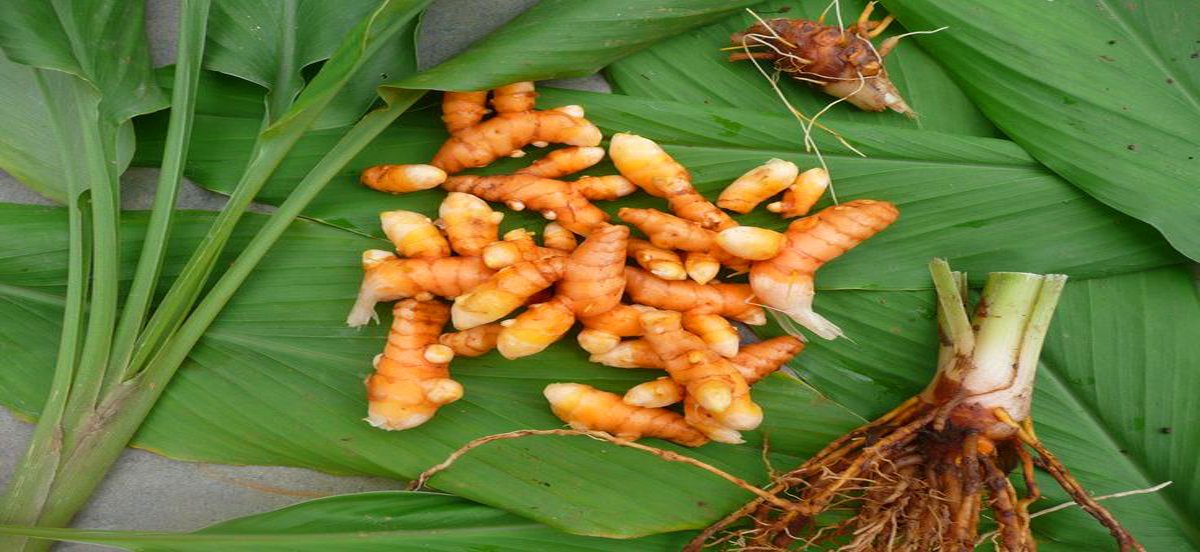
Among the two critical forms of turmeric - Chinna Nadan and Perum Nadan, the Erode farmers increase Chinna Nadan. It is grown as an essential industrial spice crop inside the Erode and bordering areas in Coimbatore district and lots of small and marginal farmers are worried in its cultivation.Speaking to Express, Chinnaraja G Naidu, Deputy Registrar of Geographical Indications in Chennai, said the product has been registered and the certificate have been issued under Class 30.
The software additionally stated that the Erode turmeric calls for warm and moist weather and the temperature in the district varies from 20 to 37.9 degree Celsius. The turmeric prospers nice on the loamy or alluvial soils.
According to the investors, Erode is considered one of the most important markets for turmeric in India. Erode Regulated Market, Erode Agricultural Producers Marketing Co-op Society, Gobi Agricultural Producers Marketing Co-op Society and open marketplace are the important daily turmeric markets in Erode. Coimbatore Regulated Market is likewise an advertising centre.
Erode nearby
It is one of the popular cultivars of Tamil Nadu with properly marketplace acceptability.Plants are lively and tall with desirable yield capability (30-32 t/ha).Fingers are quick, slightly bent with a deep orange internal core, with a moderate curing percentage.Curcumin content is 3.Nine in keeping with cent.
Erode is famously referred to as "Turmeric City" or "Yellow City" as a consequence of the manufacturing of turmeric inside the state. It additionally has certainly one of the biggest markets for coconut. And coconut oil manufacturing in South India.
To know more, please click the below link…
https://renghaholidays.com/