About District
Formation
Viluppuram (additionally Villupuram and Vizhupuram) is one of the thirty-two districts of Tamil Nadu country placed at the southern tip of India. The district headquarters is placed at Villupuram. Viluppuram district got here into lifestyles on 30th September 1993 whilst it changed into the South Arcot district. Viluppuram is the most important district within the country. The district lies inside the center of Tiruchirapalli to Chennai National Highways No. 45. It is nicely related through the rail avenue and it's far from a prime junction. One can go to any nook of the Tamil Nadu in addition to other elements of India from here. The district has temples, mosques and churches which might be very vintage and well-known. Villupuram is placed on the bank of the thenpennai river.
Location
Viluppuram District lies among eleven 38′ 25″ N and 12 20′ 44″ S: 78 15′ 00″ W and 79 42′ fifty five″ E with an area of 3725.54 Sq.Kms. It is surrounded on the East and South sides by using Cuddalore District. The West via Kallakurichi District and on the North with the aid of Tiruvannamalai and Kanchipuram District.
Administrative Units
At present Villupuram district comprises two Revenue Divisions, nine Administrative Taluks, 932 Revenue Villages, 2 Municipalities, 8 Town Panchayats, 13 Blocks and 693 Village Panchayats.
Geological pattern
The General geological formation of the District appears to be basic. The better portion of it's miles is blanketed by using the Metamorphic rocks belonging to the Genesis circle of kin. There are also 3 tremendous sedimentary rock organisations belonging to particular geological intervals. The most beautiful area of the district lies between the slopes, around the Gingee Hills.
HISTORY
Viluppuram District became earlier a part of Cuddalore District. It then bifurcated from Cuddalore and became a separate district on thirtieth September 1993. Because of this, the history of Villupuram district intently resembles that of Cuddalore.
The Cholas had been the early rulers. Among these rulers, Karikala Chola changed into the most well-known and effective. For a short length, the Cholas were overthrown by means of Simha Vishnu Pallava and the Region came beneath the Pallava rule for some time. Vijayalaya Chola once more revived Chola rule. This was the beginning of the awesome Chola Empire.
The later Chola rulers were vulnerable and the electricity surpassed on to the hands of Eastern Chalukyas.Cholas regained their lost role but with the rise of Jatavarman Sundara Pandya-1 (1251 A.D), Chola supremacy came to a stop. The sway of Pandyas lasted for over 50 years, accompanied through Muslim domination from 1334 to 1378 A.D. By 1378, the area came under the rule of thumb of Vijayanagar Kingdom and Nayaks were appointed because the rulers of the location.
In 1677 Shivaji took Ginjee's place with the help of Golkonda forces. Then got here the Mughals. During the Mughal regime, both the English and French acquired settlements in South Arcot.
During the Anglo-French rivalry, the entire district became a conflict land. After sometime, the whole location came under the manipulation of East India Company. It remained underneath British authority until 1947 while India became independent.
Education
School schooling facilities are to be had in this district via 1777 primary colleges ( including nursery colleges) 311 Middle schools, a hundred and fifty High Schools, a hundred Higher Secondary Schools. Regarding higher training Arts Colleges, Engineering Colleges, Poly-Techniques, Industrial Training Institute and Teacher Training Institutes are to be had in this district. The Government has run hostels for boys and girls for SC., ST., MBC and Backward training.
The Literacy fee of Viluppuram District is 64.7 percent Compared to the State determined of seventy three.47 percent in the year 2001.
Agriculture
The chief meals vegetation of Viluppuram district are paddy, Cholam, Ragi, Cumbu, Redgram. Blackgram, Horse Gram and Varage. The leader cash vegetation are Sugarcane, Groundnut, Cotton, Casuarina and Coconut.
Health
In Viluppuram District 21 Hospitals are functioning to appear after the Health and Family welfare of the people. Out of this 10 Hospitals come beneath allopathy, 9 under Siddha and a couple of underneath Homeopathy, with a body of workers strength of one hundred forty Doctors, 149 Nurses and 279 Technical humans.
The Network additionally consists of 2 Allopathy dispensaries, 1 Siddha dispensary, 80 Primary health centres and 557 Health sub-centres. One cell clinical group fulfils the scientific need of the human beings of Kalvarayan Hills.
Irrigation
The rivers within the district aren't perennial. The Pennaiyar is the most important river and the alternative vital rivers are Komugi, Manimuktha, Kedilam, Malattar, Sankaraparani and Varaganathi. The major supply of irrigation is by tube wells and open dugwells. The river irrigation accounts for less than four.3 percent of overall irrigated location. The district largely depends on groundwater, lakes and tanks for irrigation.
Industry
Viluppuram district is growing in the business region. The Sugar enterprise is the fundamental industry within the district. There are 4 sugar factories at Mundiyampakkam, Periasevalai, Kacharapalliyam, Mungailthuraipattu.
In the place of small scale industries, there are sixty-seven Rice generators, 17 Sago factories, five Rice bran oil extraction units, and 8 Cotton Ginning Mills. Besides this mineral water, ceramics, car workshops are also jogging inside the district.
Major minerals produced in the district include Black granite, Blue metals, River sand and so forth. There is no Industrial estate within the district and whilst compared to the populace the commercial establishments are pretty insufficient to satisfy out the activity requirement of the knowledgeable teenagers.
Communication
Tamil
Panchavati Panchamukha Anjaneya Temple Villupuram
This ANJANEYAR differs from different Panchamuga Anjaneyar because the five heads are front facing and 5th face BACK.
The idol of the imperative photograph is 36feet on top making it one in all its very own kind.
Poovarasankuppam Lakshmi Narasimha Temple
One of the maximum major shrines of Lakshmi Narasimha, Poovarasan Kuppam, close to Villupuram, Tamil Nadu, is likewise referred to as South Ahobilam. The presiding deity is Sri Lakshmi Narasimha Swamy and his consort is Goddess Amirthavalli of Poovarasankuppam.
This temple is about 1200 years old. This is a spot wherein he is said to have given darshan to the seven rishis along with his consort.
Lord Narasimhar took an on the spot incarnation as human-lion God, answering the prayers of his bhaktha – Prahalada to slay the demon king – Hiranyakasibu. After slaying the king, his anger did now not subside and he roamed throughout India.
On the Northern shore of the river South Pennai in South India known as Dakshina Pinakini, the “Saptha Rishi’ or Seven rishis prayed to the Lord to have his darshan. It is at a spot called Poovarasankuppam, in which he gave darshan to these rishis.
Parikkal Sri Lakshmi Narasimha Swamy Temple
This is a historic temple built by way of Vasantharaja of Vriddhachalam and is 1800-year-vintage Lakshmi Narasimha Temple in Villupuram, Parikkal, Tamil Nadu. Prarthana Sthalam: It is said that debts, enemies and sicknesses will disappear if prayers are provided in this temple. Located about 25 km southwest of Villupuram and three km west of Kedilam Cross Road, along the Chennai-Trichy National Road.
It is one of the four temples of Narasimha temples in this vicinity. The others are Anthili, Poovarasan Kuppam and Singiri. In addition, there is the Sayana Narasimha at ThiruVathigai in Panruti.
Anthill Sri Lakshmi Narasimha Temple
Anthili Sri Lakshmi Narasimhar Temple is located 195 km south-west of chennai, opposite the SH7 of Villupuram-ThiruKovilur, at the banks of the Pennai River. This Lakshmi Narasimha temple is a 1600 years antique temple in Anthili, Villupuram, Tamilnadu. This is one of the four Narasimha temples on this location, the others are discovered in Parikkal, Poovarasan Kuppam, Singiri and it's far one of the eight outstanding Narasimha temples of Tamil Nadu which might be positioned at Namakkal, Sholingur, Singaperumal Koil and Sinthalavadi. Puranas say that Lord Vishnu gave darshan to Garuda in the form of Narasimha swamy in these temples.
This Narasimhar temple is constructed on a rock in Garuda shape that is visited and worshipped by extremely good sages and Mahatmas. It must additionally be mentioned that the rays of the Sun God falls at the divinity who presides three hundred and sixty five days a 12 months.
Those who face the burden of debt and the threat of enemies, obstacles in marriage, childless dad and mom, eye illnesses and intellectual illnesses, pray to Lord Narasimha in this temple.
Azhagiya Narasimha Perumal Temple, Ennayiram, Villupuram
The temple at Ennayiram referred to as Alagiya Narasimha Perumal temple has a few precious inscriptions that throw light on the administrative arrangements that existed then; and there's one report mainly that gives us precious information about a Vedic College and a hostel run in the campus of the temple.
Ennayiram turned into a taniyur as well as a and changed into perhaps the focus of the vicinity. An inscription dated within the twenty-5th yr, 112th day of Rajendra I (a.D. 1036), observed at the west and south walls of the crucial shrine of Alagiya Narasimha Perumal temple (ARE 335 of 1917), mentions that at the order of the king Rajendra I, the assembly of Rajaraja-chaturvedimangalam in Rajaraja valanadu, met in the hall known as Mummudi-sola mandapam underneath the chairmanship of Nambi-udattur Udaiyar, who administered the village, and made preparations (vyavastha) concerning the allocation of the earnings derived from lands belonging to a number of temples, and set apart the quantities for diverse services in these temples.
Ulagalantha Perumal Temple Villupuram
Ulagalantha Perumal Temple or Trivikrama Temple is a Hindu temple devoted to Vishnu positioned in Tirukkoyilur, Tamil Nadu, India. Constructed inside the Dravidian style of structure, the temple is glorified in the Divya Prabandha, the early medieval Tamil canon of the Azhwar saints from the 6th–ninth centuries AD. It is one of the 108 Divyadesam dedicated to Vishnu, who is worshipped as Ulagalantha Perumal and his consort Lakshmi as Poongothai.
The temple is thought to have been constructed by the Medieval Cholas, with later contributions from Vijayanagar kings and Madurai Nayaks. The temple covers an area of five acres and has a temple tower that is the 1/3 tallest in Tamil Nadu, measuring 192 feet in height. According to Hindu legend, Vamana, a dwarf and an avatar of Vishnu was regarded here to quell the.
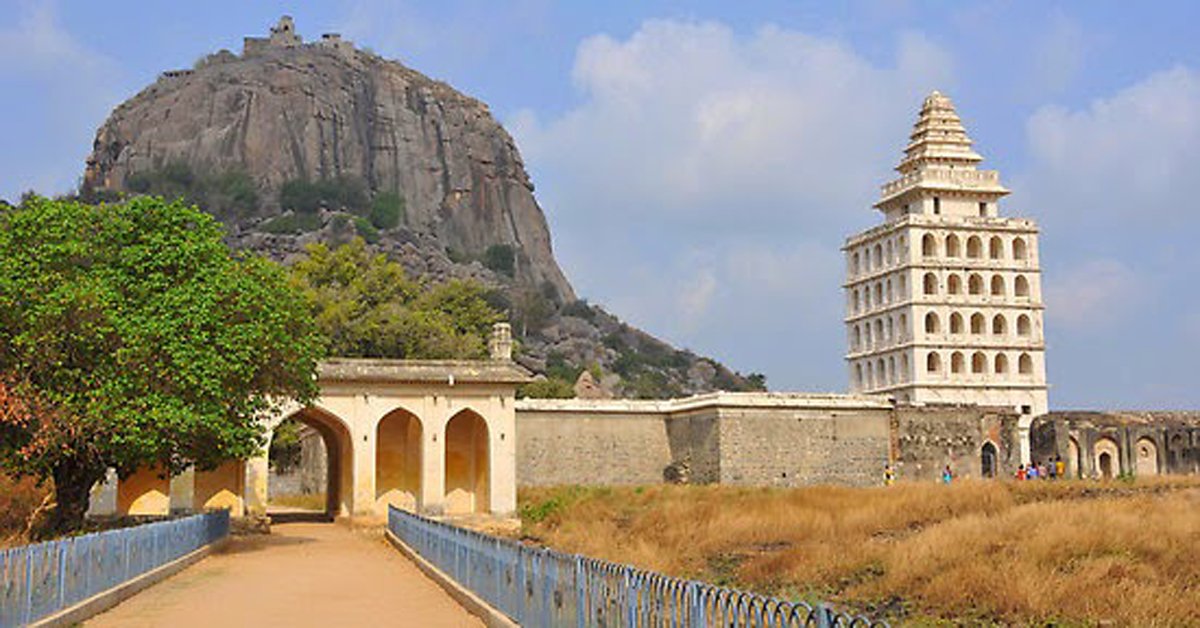
Gingee Fort
Gingee is referred to as GINGEE in Tamil. The small metropolis of GINGEE turned into as soon as a capital city, With its province extending from Nellore in the north to the Coleroon (Kollidam) in the south. According to neighborhood legend, GINGEE Amman was one of the seven virgins who had been the guardian deities of the Village. Legend has it that at around 1200 A. D., GINGEE became fortified with the aid of Ananda Kone, chief of the neighborhood shepherd community. In 1240 A. D. Krishna Kone.
His successor is said to have fortified the northern hill which later came to be known as Krishnagiri. The kone dynasty gave manna to the kurumbars, who established their headquarters at Sendamangalam, which later came below the powerful Chola empire. Recorded records go back to the 16th century, whilst Gingee (GINGEE) became the seat of the Nayaka rulers, who were beneath the lordship of the increasing Vijayanagar empire. Krishnadevaraya appointed Krishnappa Nayaka, and he became the founder of the Nayaka line of Gingee.
Most of the systems, fortification partitions and temples have been constructed throughout this period. The fortifications and defenses have been in addition reinforced beneath chatrapati shivaji, the super Maratha ruler, turned into captured Gingee in 1677 A. D. Gingee got here under the hegemony of the Moghul emperor Aurangazeb in 1691 A. D., and sarup singh became appointed as the leader of Gingee by the emperor, under the manipulation of the Nawab of Arcot.
Sarup Singh's son. Raja De singh, revolted in opposition to the Nawab of Arcot, and became defeated and killed in the battle that accompanied. Though Gingee became a part of the Nawabs territory in 1714 A. D . The younger and brave De Singh have become a legend and his heroic deeds have been sung in the shape of famous ballads. Thus Gingee too have become quite well known. In 1750 A. D., Gingee came under the French rule and remained so till it was surrendered to the British in 1761
GINGEE today, with its ruined forts, temples and granaries, gives a one-of-a-kind photo from the superb splendor of its bygone days. But the status of that valorous beyond, talk volumes approximately the severa invasions, conflict and bravery that it witnessed. We invite you to this land of the courageous and powerful, to witness an excellent past that also lives within the ruins of the GINGEE fort.
The forts are located on both facets of the road to T. V. Malai . They are open from 8.00 hrs. To 17.00 hrs. Any assistance may be sought on the ASI office or the ticket counter
Fortification Walls
The big fortification partitions of Gingee interconnect the 3 inaccessible hills-krishnagiri, chakkili drug and Rajagiri. The three hills are deported in the shape of a triangle, at the same time as the principle wall connecting them is 20 meters thick. The tops of the 3 hills form impregnable citadels, even as the inner castle contains many fortifications and gates. The Rajagiri castle is the best, about 800 ft. In height, and the maximum inaccessible. The 20 meters deep chasm is now related via a bridge.
Kalyana Mahal
Built in the indo-Islamic style, the kalyana Mahal is one of the most appealing ruins in the citadel. It consists of a rectangular court docket, surrounded through rooms for the ladies of the Governor's family. In the middle of this court docket, is a 27 meter high square tower, constructed of stone. The tower has a pyramidal roof. The rooms on this tower are very much like different Vijayanagar Nayaka buildings somewhere else.
Venugopala swamy Temple
Located to the west of the inner gate of the decreased castle, the temple carries a first-rate sculpture depicting Lord Krishna gambling at the flute with his consorts. Another interesting function in this temple is a finely polished, broad smooth slab discovered in front of the temple.
The Ponds
The manner to the Hanuman Temple, out of doors the decreasing fortress, abounds in temple ponds and plenty of awesome structures. Chakkarakulam and chettikulam are the two famous ponds on this fortress. Chettikulam turned into built with the aid of Raja Shetty at some point of the Maratha occupation of the place, towards the end of the 18th century. To the north of this pond is a platform believed to be Raja Desingh's funeral pyre, where his young wife devoted sati.
The well-known Ranganatha temple
Built in typical Indo-Islamic fashion, the Audience corridor is a broken roof supported by a sequence of graceful little pointed arches. The Magazine building is also a noteworthy shape. Built in normal Vijayanagar style, is the famous Ranganatha Temple. To the south of the watch-tower, is a big iron cannon, kind of 4 meters long, and a pair of meters in circumference. In fashion and shape, this cannon could be very similar to the Malik-1-Maidan of Bijapur.
Sad – at – Ullah Khan Mosque
This mosque was erected through sad – at – Ullah khan to commemorate his victory over De singh and the size of the fort in 1713 A. D . It's miles placed at the entrance of the inner castle of Rajagiri. According to a Persian inscription determined right here, the mosque is said to have been constructed in 1717 –1718 A. D.
Thiruvaamathoor
A historical Chola temple. Dedicated to Lord Sri Abiramaeshwarar is located right here. 1500 years antique temple. As the temple seems to have changed many arms Times between. Rajaraja Chola I (AD 985-1012) and Sarangadeva Maharaja. (1584.AD) The Amman Named Muththambigai.
Sri Ramanatha Eswarar Temple, Esalam
Built with the aid of Rajendra Cholan I (1012) lord Sri Ramanatha Eswarar. The legend is found in the Sanskrit language and in Grantham man or woman. Written on the periphery of the seal is as follows, Rajab-Rajanya Makuta sreni-ratnesu sasanam Etad Rajendra Chola Ya parakesari varmanah. A shrine devoted to kamalakanni Amman (Goddess Durga), a neighborhood deity, is observed on the manner to the castle on Rajagiri Hill. It includes a sacrificial altar and nicely – preserved mural art work belonging to the Nayak length.
24 Theerthangarargal
It is 2 kms north of Gingee metropolis. The hillock at the western aspect of the street has jaina caverns and a massive boulder containing sculptures of all the 24 Tirthankaras 9th Century style. It is the best region where all of the 24 Tirthankaras are shown in an unmarried large composition. An open rock close by was the vicinity where monk Chandra Nandini observed 57 days of fasting and died (fifth- 6th century A.D).
Another monk Ilayabhattara discovered 30 days of fasting and died inside the Century A.D. The pathway leading to the caves on the ground level has a picture of Adinatha and at the top a figure of Mahavira.
Melmalayanur Angalaparameshwari
The temple of Angala Parameswari is 32 kms from Gingee, the special deity of the Sembadavars. Here the festival happens in February-March. A unique function of this pageant is the Simimasana kollai. The individuals who attend the pageant cook large portions of grain of numerous sorts and set them out inside the burning floor and provide them to the goddess who is introduced there.
Every Amavasya (New Moon day) there may be the Lakhs of devotees throng here. Located here. In the inner sanctum there is a snake pit that is being worshipped. There is a congregation of devotees on every new moon day.
Singavaram
The temple of Lord Ranganatha, the tutelary god of Raja Design is on a hilltop. It is a superb specimen of south Indian sort of rock – reduced shrine. The idol of Lord Ranganatha, in a reclining posture, measures 24 feet, in duration which together with the internal Sanctorum, is carved out of an unmarried rock. It is stated to be bigger than that of The idol in Srirangam.
Venkataramana Temple
This sprawling temple, with its hanging sculptures and carved pillars, narrates the aesthetic capabilities of the Nayaka dynasty. Built by way of MuthialuNayaka (1540-1550 A. D ) this is the most important temple to GINGEE. The later Vijayanagar length. The temple abounds in gopuras, mandapas and sculptured panels depicting gods and goddesses in scenes from the Hindu epics. Many Tamil inscriptions also are found in the walls of the Mandapas.The temple seems to have faced tough times for the duration of the French profession (after 1761 A .D.) From this period the temple experienced styles of decay and vintage archaeological wealth turned into plundered via subsequent invaders.
Krishnagiri
This is a small hill made from granite boulders, located to the north of Rajagiri on the primary street from GINGEE to Tiruvannamalai. The fort on this hill, may be reached by mountain climbing a flight of steps over a steep slope. Within the citadel are two stone-built granaries, a pillared corridor, temples and an edifice constructed of brick and mortar called the Audience Chamber.
A famous Archeological Temple web page is 20 kms from Villupuram and 17 kms from Gingee. It is a one hundred feet hillock, where the Mahendra Verma (I) of Pallava kind, (580-630 made a cave temple.
Mel Chittamur
It is 20 kms of Tindivanam and 10 kms east of Gingee. Headquarters of Digambara sect in Tamilnadu with the JINAKANCHI MUTT presided over with the aid of the Pontiff. Two temples, one committed to Parsvanatha and different called ‘Mailanatha temple' became initially a boulder containing roc-cut images of Bahubali, Parsvanatha, Adinatha, Mahavira and Ambika yakshi carved within the 9th century AD. Rebuilt within the 16th century and renovated within the present century.
Auroville
A global township. This metropolis of the day after today within the making – supported and encouraged by using the Government of India, and endorsed by UNESCO – is sited just across the Puducherry border in Tamil Nadu. Representing an test in global dwelling, it changed into released in 1968 on the behest of the Mother of the Sri Aurobindo Ashram at an inaugural function attended through representatives of 124 international locations and all the States of India.
This “City of Dawn” continues to be in its preliminary stages of development, though the Matrimandir, the central building meant for silent awareness, is now purposeful, as are many different predominant facilities, which includes its Visitors Centre, Town Hall, and many others. The close-to-2000 auroville residents from a few 40 international locations live in 100+ scattered settlements spread across the panorama, either inside the metropolis place or surrounding the Green Belt.
The purpose of the assignment is the success of an actual human solidarity in diversity, at the same time as at the same time learning into new approaches to education, fitness care, alternative strength usage, environmental regeneration, and sustainable dwelling in popularity. Each inhabitant of Auroville contributes in his or her own manner towards building the township.
Mailam
Arulmigu Subramaniya Swami Temple placed on a small hillock at Mailam is a well-known region for pilgrimage. It is about 32 kms from Villupuram at the Pondicherry – Tindivanam road. The Panguni Uthiram festival held in March – April fascinates a large crowd of devotees from all over Tamil Nadu.
Thiruvakkarai
A Geological park is ready forty kms from Villupuram and 25 kms from Puducherry. A country wide geological park with a massive variety of petrified tree trunks called fossils are located right here. There is a temple for Lord Shiva built with the aid of the well-known Chola queen Sembiyan Madheviyar. Arulmigu Chandramouleeswarar and Tenambikai are the presiding deities right here.
Arulmigu Kalasalingam and Arulmigu Vakrakali for whom every complete moon day and night time of the yr unique prayers are conducted and thronged through pious devotees at some stage in the night. The Temple was sung via the Thirugnana Sambandar. Excellent sculptures and automobile/chariot like Mandapam is also present here with huge Nandhi and Ganesha. It is linked via Tindivanam and Pondicherry through ordinary buses.
Thiruvennainallur
It is 20 kms from Villupuram at the Thirukoilur street that is the start location of Sadayappar, the purchaser of Kambar (The finest Tamil poet and creator of the Tamil Epic Kambaramayanam) There is likewise an historic temple devoted to Lord Siva.
Marakkanam Beach
It is 22 kms from Pondicherry through East Coast Road in Vanur Taluk. The salt discipline may be very famous on this seaside. Marakkanam Beach is located in Marakkanam that is a coastal panchayat city & Taluk in Villupuram district inside the Indian state of Tamil Nadu. It is well connected to the kingdom capital Chennai and the close by union territory of Puducherry with the aid of the East Coast Road.
Marakkanam seaside is positioned in the coastal metropolis Marakkanam. It comes below Villupuram district, Tamil Nadu. Salt field is one of the famous sights. Marakkanam holds 2d vicinity in salt manufacturing in Tamil Nadu. Buckingham Canal in Marakkanam was built by British Raj which turned into used for transferring items within the 19th and 20th century.
Marakkanam Salt Pans
Marakkanam is well-known for its salt pans. You can view the salt banks along the coastal facet. In Tamil Nadu, Marakkanam ranks the second function for salt production.
Kaliveli Lake
This lake is considered one of the biggest wetlands in India and it's miles rich in plant life and fauna. Several migrant birds come right here throughout July and August. Kingfishers and Flamingos are famous birds right here. Take time to go to this location and revel in nature.
Alamparai Fort
Alamparai Fort is at a distance of 20.2 Km from Marakkanam. This citadel is also known as Alampara, Idaikazhinadu, Alamparva, and Alampuravi. It is dated to the seventeenth century and it was constructed during the Mughal period.
They used it as a port and several objects have been exported from right here. Occupying 15 acres, the castle is made up of bricks and limestone. In 1750, the fortress came under the control of French and at the time of the Carnatic war, British took over the location. After which it was destroyed.
Temples and Churches Around Marakkanam
Visit the temples and church buildings around Marakkanam. Few temples encompass Draupadi Amman Temple, Shri Murugan Temple, Bhumi Eswarar Temple, Sri Anchaneya Swamy Temple and extra. Keep in mind the temple timings and go to them as a result.
Churches encompass Our Lady of Maduranayagi Church, Faith Life IPA Church.
Chennai To Marakkanam
The distance from Chennai to Marakkanam is 123 KM and the tour time is around three hours. From Chennai you may reach Marakkanam thru ECR avenue through Mahabalipuram and kalpakkam or via GST road through Chengalpattu and Madurantakam. There are direct buses from Chennai CMBT.
Travelling by road is the first-class option as there is no right railway station in Marakkanam. If you want journey by train, then you want get down at Chengalpattu or Melmaruvathur railway station
Pondicherry To Marakkanam
The distance between Pondicherry and Marakkanam is around 35 Km and the travel time is around 1 hour. There are direct buses from Pondicherry.
Villupuram Junction is a junction railway station located in Villupuram, Tamil Nadu. Being an outstanding railway station, it serves as the distribution point of rail visitors from Chennai, the state capital of Tamil Nadu, toward the southern parts of the nation. It is the second one largest junction by number of branch lines in the country of Tamil Nadu after Salem junction. It is one of the A Grade train stations in Tamil Nadu.
Villupuram Railway Station covers approximately 20 acres of a large region, six structures - Platforms 1 to three occupy a length of six hundred metres (2,000 ft) and structures 4 to six occupy a period of 550 metres each and few goods/freight teach traces which occupies 650 metres (2,a hundred thirty feet) every and there are few shunting traces.
The Railway lines can be effortlessly crossed with the assistance of two masses based over bridges. The railway station is located off the East Pondy Road inside the Keelaperumpallam neighborhood. The station is positioned in close proximity of three km (1.Nine mi) from the arterial GST Road. Several landmark locations consisting of the Arignar Anna Science and arts College, the Government Hospital Building, and the TNEB Block are located at near proximity from the station.
Viluppuram is the largest district inside the country. The district lies inside the middle of the Tiruchirapalli to Chennai National Highways No. Forty five. It is nicely related through the railroad and it's miles foremost junction. From right here you possibly can go to any corner of the Tamil Nadu in addition to to different parts of India.
This district is having variety of traveller spots which are extra than 500 years old. The district has temples, mosques and churches which are very antique and well-known. Villupuram that is positioned on the financial institution of thenpennai. It having all government places of work in one complex. Gingee castle, auroville, tirukoilur, malai kovil near ananthapuram,kalvarayan hills and so forth.
Etymology
Viluppuram is called after a class of humans called "Vizhum Paraiyar" . One of the famous Tamil poets Jayamkondar wrote a book titled "Karanai Vizhupparaiyan madal" at the praise of Aadhinathan Vizhupparaiyan who served as a commander within the army of Kulottunga Chola I. The city came to regarded after the "Vizhupparaiyan" sect named after him. They also are called "Vizhupaadharaiyar". Viluppuram is also affectionately called as "Vizhimaa Nagaram" in Tamil. It approach metropolis with wide-eyed humans.HistoryViluppuram District was earlier part of South Arcot District along side Cuddalore District. It changed into then bifurcated from Cuddalore and have become a separate district on 30 September 1993. Because of this, the records of Viluppuram district carefully resembles that of Cuddalore. Make your personal Viluppuram District vacation itinerary, with a little help from those who recognize the place like the lower back in their fingers, with the aid of using our India ride itinerary builder tool.
To know more, please click the below link…
https://renghaholidays.com/